
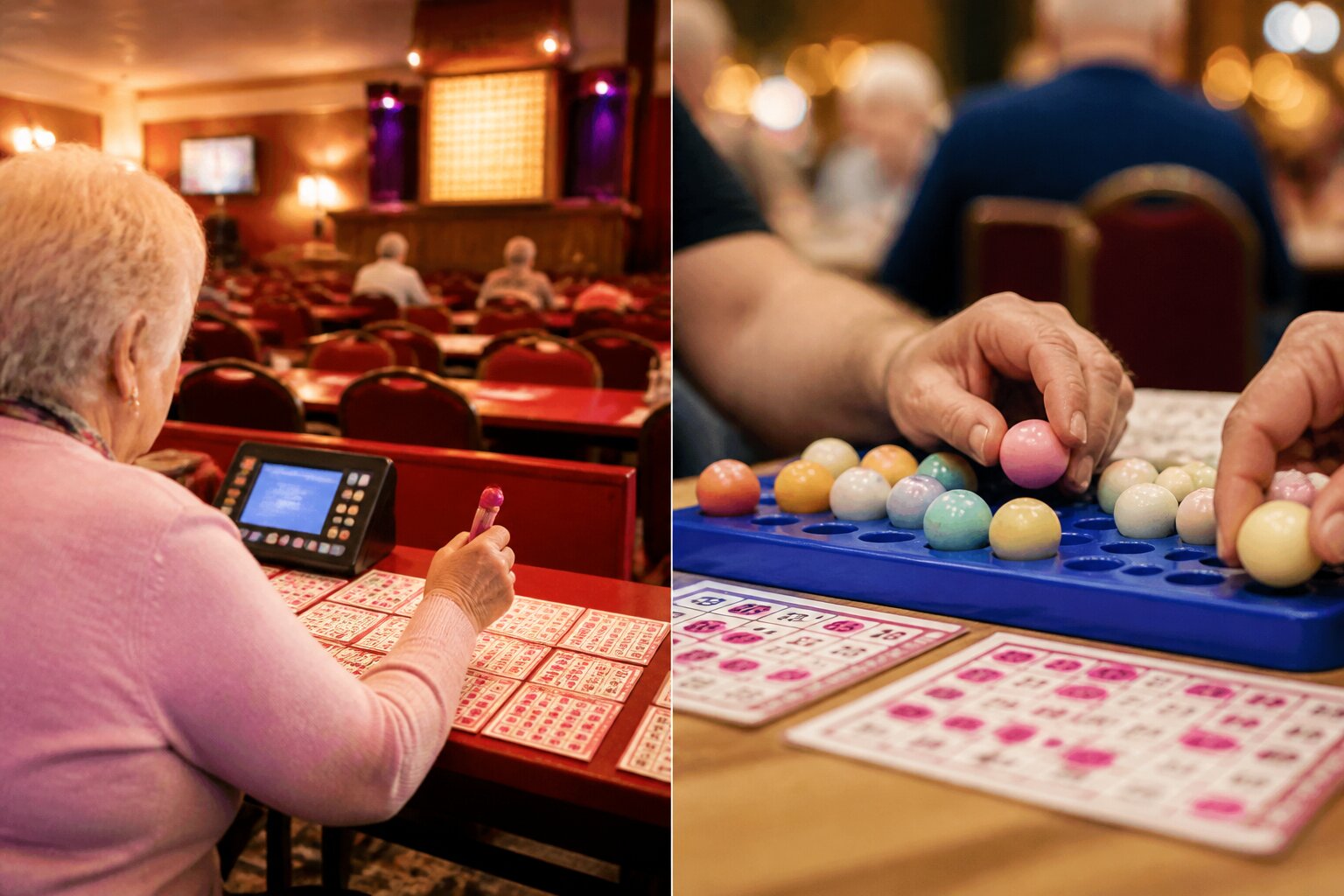
Bingo is loved around the world, but the way you play can be completely different depending on where you are. Whether you’re used to eyes down at a local British bingo club or the faster rhythms of American halls, each version has its own rules and character.
From the number of balls to card layouts and prize structures, American and UK bingo offer distinct experiences. If you’re deciding which to try next, or simply want a clearer picture before your next game, this guide will walk you through the key differences and what to expect.
What Are the Main Rule Differences Between American and UK Bingo?
The most obvious difference is the card format. American bingo uses a 5x5 grid with 25 squares, while UK bingo cards are arranged in three rows by nine columns, with 15 numbers on each card and the remaining spaces left blank.
American games use 75 balls, numbered 1 to 75, and each column on the card corresponds to a letter: B, I, N, G, O. The centre square is typically a free space, which affects how patterns form and how quickly a card can be completed. UK bingo is played with 90 balls. Numbers are spread across the 3x9 card so each column covers a set range, which changes the pacing and the strategy for spotting numbers.
Winning conditions differ too. In American bingo, games usually award prizes for completing pre-defined patterns - straight lines, diagonals, or shapes chosen for a particular round. UK bingo commonly follows a three-stage structure: one line, two lines, and a full house (all 15 numbers). This creates a clear progression within each game and a different sense of momentum compared with pattern-based play.
Calls and pacing can vary by venue. UK sessions in clubs often move briskly, with numbers called in steady succession, while some American-style games give players slightly longer between calls to find numbers and confirm patterns. Both formats rely on transparent draw methods, whether physical balls or certified digitalisers, to ensure a fair outcome.
How Do the Bingo Cards Differ?
American bingo cards are a 5x5 grid. Each column relates to one of the letters B-I-N-G-O, and numbers are organised into defined ranges under those letters. The free centre square lowers the number of marks needed for many winning patterns, which affects how players scan and follow the card.
UK cards are 3 rows by 9 columns, with only 15 numbered spaces. Each row contains five numbers and four blank spaces, which produces a visually different card and a different rhythm when marking off numbers. Columns typically cover certain number ranges, so players glance vertically as well as horizontally to locate calls.
These layout differences shape how players engage with the game. The American grid encourages pattern recognition across rows, columns and diagonals, while the UK card places emphasis on completing lines and monitoring multiple rows for the full house. Both are designed to be clear and straightforward, whether in a hall or online.
This leads naturally into how numbers are announced in each version.
How Are the Numbers Called in Each Version?
In American bingo, each call combines a letter with a number, for example B-12. That pairing makes it quick to find the number in the corresponding column. Calls are drawn one at a time from a machine or a certified digital system, with the caller announcing each letter-number combination clearly.
UK bingo calls use only the number itself, such as thirty-two or fifty-six. In clubs the caller will often display the number on a board, while online platforms show the call digitally. Calls come from a pool of 90 balls, and the draw method is recorded so players can verify the sequence if needed.
Clear, consistent calling helps players keep pace and reduces disputes. Whether you’re in person or online, look for operators that describe their draw method and provide on-screen tracking if you need it.
Prize Structures: How Do Winnings Compare?
American bingo prizes usually attach to specific patterns set before the game starts. Some rounds award a single prize to the first player who completes the required shape, while special events may distribute multiple prizes for different patterns.
In UK bingo, the typical structure awards a prize for completing one line, a higher prize for two lines, and the largest prize for a full house. This tiered approach means there are often several winners within a single game session, and the full house tends to carry the biggest reward.
Prize levels are affected by the number of players and ticket sales if the event pools stakes, or by fixed prize pots for promoted games. Operators will state whether a jackpot is fixed or funded by ticket revenue. That information helps players understand what to expect from a session.
Which Game Offers a More Social Experience?
Both styles can be social, though that sociality shows up in different ways. In-person games bring players together before and after sessions, and the layout of bingo halls often encourages conversation and small groups. Online rooms recreate some of this interaction through chat features and hosts who moderate and energise the space.
The American format, with its focus on patterns and occasional slower pace, can give players time to chat between calls. UK sessions, particularly in busy clubs, can move more quickly, creating a lively atmosphere where players exchange tips and celebrate line wins in rapid succession.
Whichever environment you choose, the social element is a complement to the game rather than its main purpose. It’s worth picking a setting that matches how social you want the experience to be.
Now that you know how the games feel, you might be wondering what draws players to one or the other.
Why Do Players Prefer One Over the Other?
Preference often comes down to familiarity and tempo. Some players favour the recognisable B-I-N-G-O grid and the variety of patterns in American games. Others prefer the clear progression of UK play with its one line, two lines and full house structure.
Practical factors also shape choices. Local availability, what friends or family play, and whether an operator offers both 75-ball and 90-ball options all influence which version becomes a personal favourite. For many, the decision is simply what feels easiest to follow on a given day.
Trying both formats is the simplest way to decide. Sampling different sessions helps you find the combination of pace, card layout and social atmosphere that best suits your style.
Bingo Myths: Are the Games Really That Different?
It’s true that American and UK bingo present different formats, but they rest on the same basic idea: matching numbers drawn at random to those on your card. Claims that one version offers inherently better odds are misleading, because licensed games use certificated draw methods to ensure fairness.
Some myths suggest card layout alone can skew outcomes significantly. While layouts shape play and the speed of wins, a properly run game—whether 75-ball or 90-ball—maintains consistent, transparent rules. The enjoyment and social value of the game are also common to both versions and depend as much on setting and company as on format.
If something seems unclear at a venue or on a site, check the game rules they provide. Clear operator information and easily accessible terms help separate fact from rumour.
Which Version Is More Popular in the UK?
In the UK, 90-ball bingo is the traditional and most commonly found format in clubs and on many domestic platforms. It’s the format most players grow up with and expect to see at local venues.
That said, 75-ball (American) bingo is available, particularly online, where operators can offer multiple game types. This gives players the opportunity to explore both styles without needing to travel.
Popularity is a helpful guide, but personal preference matters most. Choose the game that feels right for you and the setting where you feel comfortable playing.
**The information provided in this blog is intended for educational purposes and should not be construed as betting advice or a guarantee of success. Always gamble responsibly.