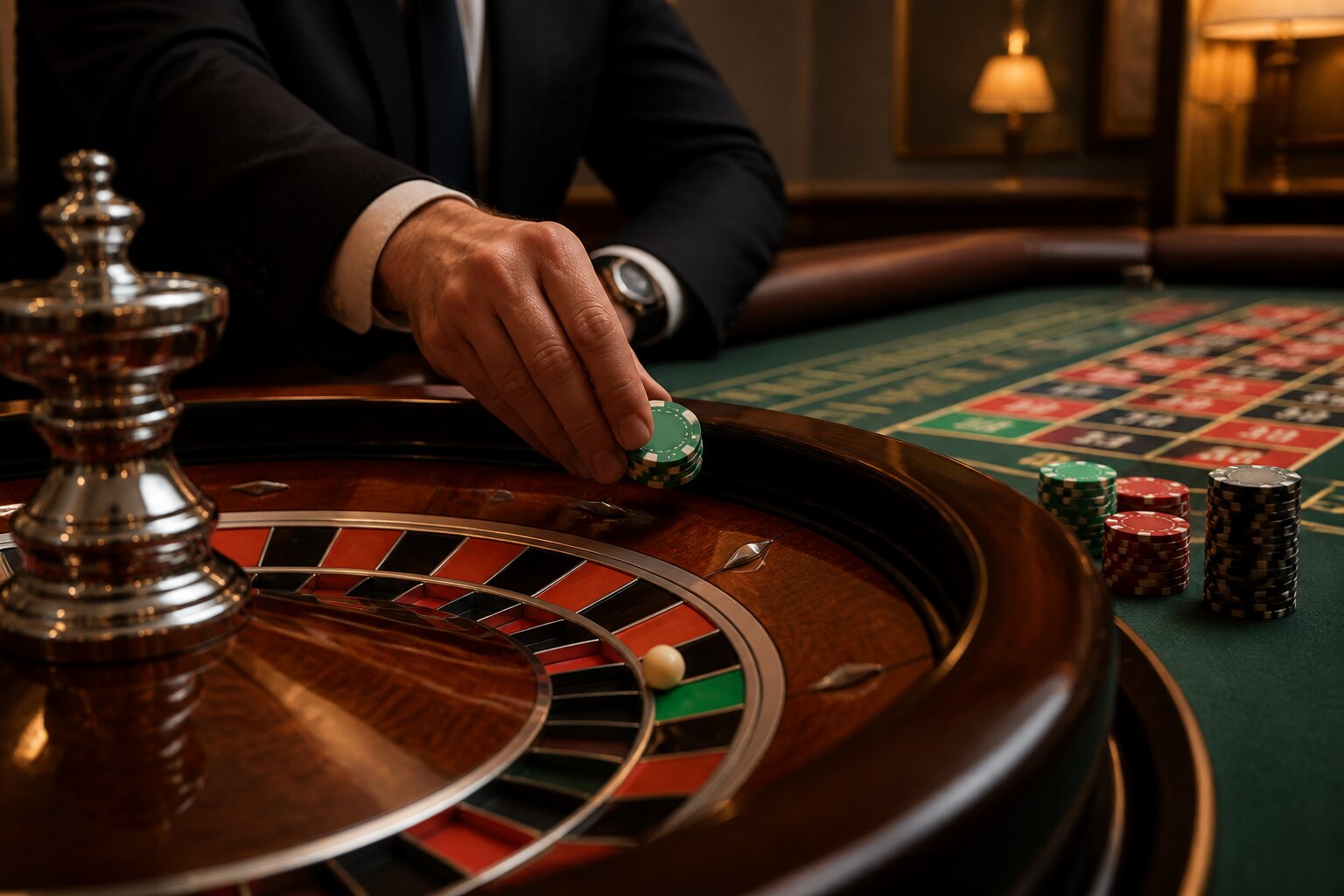
Ever wondered if there’s a right moment to place your chips on zero when playing roulette? You’re not alone — the green zero often attracts attention and curiosity.
Some players watch the wheel for patterns or build specific bets that include zero, while others treat it as a way to broaden coverage on the table. This article breaks the mechanics and common ways to bet on zero into clear examples so you can make informed choices before the next spin.
Read on to understand how zero affects the game, what bet types involve it, and what to expect from the odds and outcomes.
Understanding the Zero in Roulette
The zero pocket is a distinct part of roulette and is the main reason the game gives the house an edge. In European roulette there is a single green zero, while the American layout adds an extra green double zero. All other pockets are divided between red and black, so the green pockets stand apart both visually and in effect.
That single or double green pocket changes how even-money bets are settled: if the ball lands in a green pocket, bets on red/black, odd/even and similar classifications lose unless the player has a specific wager covering the green. The betting table places the zero separately at the top of the grid, reflecting its special role.
A straight-up bet on zero is placed directly on the green box and pays 35 to 1 in both versions. The presence of a second green pocket on American wheels increases the house advantage, which is important to keep in mind when comparing the two variants. Understanding these basic differences sets up the next section on why zero matters for the house edge and player outcomes.
Why Does the Zero Matter?
Zero matters because it directly reduces the expected return of many common bets. With a single zero, European roulette carries a house edge of 2.7%; the extra double zero on American wheels pushes that edge to about 5.26%. These percentages describe the casino’s long-term advantage, calculated from the number of pockets and the fixed payouts.
Some European tables offer rules that soften the effect of zero on even-money bets. Under La Partage, players recover half their stake when zero appears; under En Prison, a qualifying bet is held for a subsequent spin rather than being lost outright. Neither rule changes the payout on a straight-up zero wager, but they do alter the risk on certain outside bets.
No strategy can alter these built-in odds, so recognising how zero shapes the mathematics of every bet helps set realistic expectations. Next, we’ll look at the reasons players sometimes put a chip on zero and how they combine it with other types of bets.
When Do Players Choose to Bet on Zero?
Players choose to bet on zero for a variety of practical reasons. Some include a single chip on zero to expand their coverage when making several outside bets; others make neighbour or sector bets that include zero to target the cluster of numbers around it on the wheel. A small zero wager can act as a form of insurance against the unusual outcome of a green pocket landing.
Neigbour-style betting or Voisins du Zéro covers a block of numbers adjacent to zero on the wheel, favouring wheel-based coverage rather than table layout coverage. These approaches require more chips but are used by players who want exposure to a specific wheel segment.
Zero bets are part of many players’ broader approaches to the game rather than a stand-alone tactic. With that in mind, the following section explains the common betting scenarios that feature zero and the typical payouts they produce.
Common Betting Scenarios Involving Zero
Below are the typical ways zero appears in bets, with concise explanations of each:
- Straight-up bet: A single chip placed directly on zero, paid at 35 to 1.
- Neighbours bet: Zero plus the numbers immediately beside it on the wheel, used to cover a small sector.
- Voisins du Zéro: A larger sector-style bet in European roulette that covers zero and surrounding numbers with multiple chips.
- Insurance-style addition: A small wager on zero alongside several outside bets to potentially offset a loss if zero is spun.
- Split or basket bets (American wheel): Group bets that include zero (and double zero) with other adjacent numbers.
These options vary in cost and coverage; the next section addresses common misconceptions players have about zero bets and clarifies what they can — and cannot — do.
Misconceptions About Zero Bets
Several misunderstandings about zero come up frequently:
- Zero is not “due” or predictable; each spin is independent and outcomes are determined by the wheel and ball.
- Regularly staking on zero does not increase expected return over time; the house edge still applies.
- Insurance-style bets that cover zero alongside other wagers do not remove the casino’s advantage, they only change the distribution of wins and losses.
- No system reliably predicts when zero will land; sector and neighbour bets change exposure but not the fundamental probabilities.
Clearing up these points helps when assessing the odds that follow, which show the practical chances and payouts for zero-based wagers.
What Are the Odds When Betting on Zero?
Odds for zero bets depend on the wheel type and the bet structure. On a European wheel (37 pockets), the chance of landing on zero is 1 in 37, or about 2.7%. On an American wheel (38 pockets), each green pocket has a 1 in 38 chance, and the existence of two green pockets changes the payout-to-probability relationship for many bets.
A straight-up zero win pays 35 to 1. Although the payout seems high relative to the single-number hit probability, the built-in house edge means the expected value of that bet remains negative over time. Split bets that include zero (for example, 0/1) reduce the payout to 17 to 1 but increase the number of winning outcomes to two pockets. On American wheels, the five-number basket (0, 00, 1, 2, 3) raises the chance of a payout but lowers it to 6 to 1.
Each bet type represents a different balance between probability and reward; knowing these figures helps in deciding whether including zero suits a particular betting approach. The next section gives simple, worked examples so you can see these numbers in practice.
Simple Examples: How Zero Bets Work
Seeing stakes and payouts in everyday terms makes the mechanics clearer. These examples use typical amounts and show how results are resolved according to standard roulette rules.
Straight Up Zero Bet Example
A £2 stake is placed directly on zero. On a European wheel, the chance of landing on zero is 1 in 37.
If zero comes up, the bet pays 35 to 1: the return is £70 in winnings plus the original £2 stake, giving a total of £72.
If any other number appears, the £2 stake is lost.
This demonstrates the trade-off between a high payout and low probability that defines straight-up zero bets.
Split and Basket Bets Including Zero
For a split bet between zero and one, a £2 stake is typically treated as two £1 portions or a single £2 split across the two numbers. A winning outcome on either number pays 17 to 1 on the portion that hit.
If zero or one is spun, the winning portion returns £17 times the unit stake plus that portion’s stake, while the losing portion is forfeited.
If neither number appears, the entire £2 is lost.
On an American wheel, a £2 basket bet covering 0, 00, 1, 2 and 3 pays 6 to 1 if any of those five pockets win.
A successful basket returns £12 in winnings plus the £2 stake for a total of £14; otherwise, the £2 is lost.
These examples show how covering more pockets raises the chance of some return but lowers the payout per unit staked. With the mechanics clear, it’s helpful to weigh the practical risks and rewards of including zero in play.
Risks and Rewards of Betting on Zero
Zero offers a clear combination of high payout potential and low probability. A straight-up win can return 35 times the stake, which makes it attractive when it does occur. However, because the appearance of zero is infrequent relative to the number of pockets, frequent losses are typical with this type of bet.
Widening coverage via splits, neighbours, or sector bets reduces the frequency of total loss but also lowers the return on each successful outcome. On American wheels, the extra green pocket increases the house edge, so similar bets produce a less favourable expected value than on European tables.
Decisions about betting on zero should consider personal bankroll limits and the intended style of play. One balanced approach is to treat a small, occasional zero bet as a way to vary exposure rather than as a principal strategy. If concerns about play arise, support is available from organisations such as BeGambleAware; these resources can help manage risk and set sensible limits.
This final point brings the discussion to a close: zero is a distinctive feature of roulette that influences odds and choices, and including it in play is a matter of preference and risk tolerance rather than a method to alter the game’s fundamental mathematics.
Play Online Casino Games at Barbados Bingo
We’d love for you to become part of our friendly Barbados Bingo community, where you can enjoy a sociable online atmosphere with other players while having a bit of fun at your own pace. Experience what we have to offer and see what makes our site a welcoming place for all.
Getting involved is simple – just set up your account, add some funds, and you’re ready to play. We’re always here to provide a warm welcome and wish you plenty of enjoyment every time you visit.
**The information provided in this blog is intended for educational purposes and should not be construed as betting advice or a guarantee of success. Always gamble responsibly.