
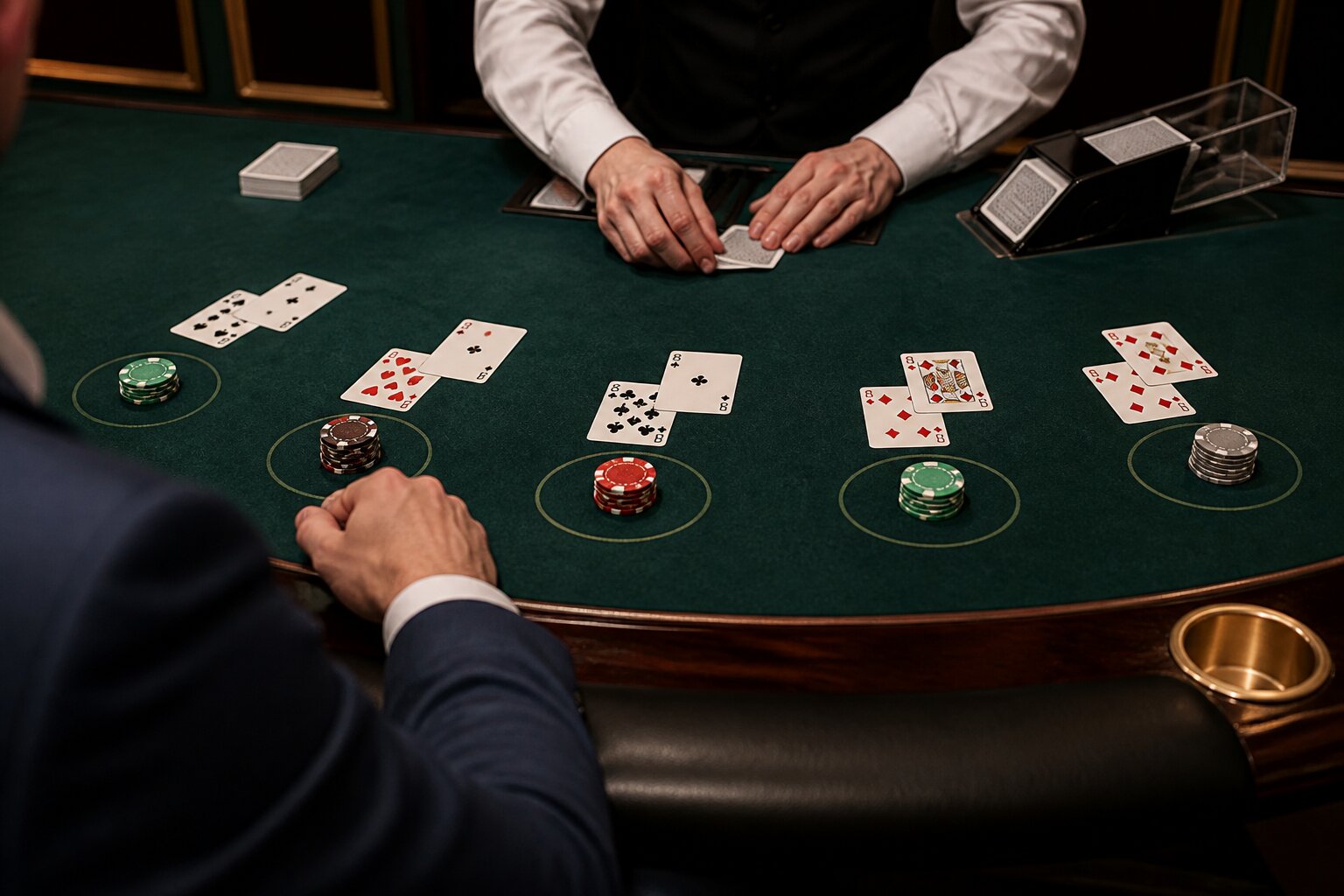
Ever wondered whether you can play more than one hand at a blackjack table? Many players are curious about how multiple hands work — whether at a physical table or online — and what rules and limits apply.
Before you try to manage two, three or more hands at once, it helps to know how bets, seating and house rules interact. This article walks through the mechanics, practical limits and common misconceptions so you can make an informed choice at the table.
Read on for clear explanations, examples and sensible advice on playing multiple hands without getting bogged down in jargon.
What Does Playing Multiple Hands in Blackjack Mean?
Playing multiple hands means the same player is dealt and plays more than one hand during a single round. Each hand is independent: you place a separate bet on each hand, receive cards for each and make decisions—hit, stand, double or split—per hand.
For example, with a £5 minimum bet, choosing two hands requires two separate £5 wagers, totalling £10 for that round. Table minimums and maximums apply per hand, not across all the hands you hold, so every stake must fall within those limits.
Playing multiple hands does not alter how the dealer plays or the rules that govern wins and losses; it only increases the number of individual bets you are handling in one round. If you want to understand how table layout and seat availability affect whether you can take extra hands, the next section explains that in more detail.
Are You Allowed to Play More Than One Hand at the Table?
Most casinos permit players to take more than one hand, but availability depends on the venue and the number of vacant seats. When a table has empty spots, dealers will often allow a player to occupy extra positions, though some casinos cap the number of hands per player—two or three is common.
Online games typically display the maximum hands you can play in the game rules; digital versions often allow more hands than live tables because seat limits don’t apply. Note also that legal play is restricted to those aged 18 and over in the UK, and operators carry out checks to verify age and eligibility.
If you’re unsure whether extra hands are allowed, a quick look at the table’s house rules or a polite question to the dealer will usually clarify the limit.
Typical Casino Rules for Multiple Hand Play
Casinos set house rules to keep play fair and efficient. These rules differ between venues but tend to cover how many hands a single player may hold, how extra bets must be placed and what happens when the table becomes busy.
That framework gives operators a consistent way to manage tables and ensures all players understand expectations. It also helps dealers process bets and payouts more quickly, which keeps the game moving and reduces disputes. Familiarising yourself with a venue’s rules before you sit down can prevent misunderstandings and delays.
Table Size and Seat Availability
Live tables usually have a fixed number of seats—often up to seven. A player may take multiple seats if others are not waiting, but during busy periods the dealer or floor staff may ask players to release extra spots so new arrivals can join.
Casinos aim to balance player convenience with turnover and fairness, so staff will intervene if multiple seats are being used while others are waiting. If you are asked to give up a seat, you will typically be allowed to continue playing your remaining hands. Rules on seat sharing can vary, so checking with floor staff when you arrive is sensible.
House Rules You Might Encounter
Common house rules include limiting players to two or three hands, requiring each extra hand to meet the table’s minimum bet, or asking players to reduce the number of hands if there’s a queue. Some casinos also require that additional hands match or exceed the first bet.
These measures prevent a single player from slowing the table and ensure stakes remain consistent. House rules may also specify how decisions must be indicated for each hand and whether a single stack of chips can cover multiple hands. Knowing these specifics helps you avoid mistakes that could lead to a voided hand or an enforced reduction in the number you may play.
Online Blackjack: Any Differences?
Online games often let you play several hands simultaneously without seat constraints. The platform will state the maximum number of hands and any betting rules in the game’s information. Even when you can play more hands online, the same per-hand minimums and maximums still apply.
Online play can offer greater flexibility, but it also comes with its own limits, such as software-enforced bet sizes and time limits for decisions. Reading the game rules and responsible gaming information before you start is a good idea, particularly if you are switching from live play where staff handle disputes and clarifications.
Knowing these rules helps you decide how many hands you want to risk in any given session; next, we’ll look at how table limits shape those choices.
How Do Table Limits Affect Playing Multiple Hands?
Table limits are enforced per hand, so the minimum and maximum stakes apply to each individual bet. If a table minimum is £5 and you play three hands, you must place at least £5 on each, producing a total stake of £15 that round. Conversely, a £500 maximum applies to each hand individually.
Because total exposure rises with each additional hand, playing several hands can quickly increase how much you risk per round. That makes tracking the cumulative amount staked essential. Many players find it useful to set a personal ceiling for total bets during a session so their overall spending remains manageable.
With that in mind, the following section explains how many hands you’re likely to encounter as an upper limit at most tables and platforms.
How Many Hands Can One Player Usually Play?
Typical limits at live tables are two or three hands, though a player may be allowed to take all empty seats when the table is quiet. Online versions can offer more flexibility, sometimes permitting up to five hands, but the precise limit varies by game and operator.
When demand is high, staff may reduce the number of hands per player to keep the table accessible to others. Before committing to multiple hands, it’s wise to check the specific table rules so there are no surprises during play. If you’d like to know why players opt for multiple hands and how that affects the experience, the next section explores those motives.
Why Do Players Choose to Play Multiple Hands?
Players choose multiple hands mainly for variety and a livelier experience. Handling several hands in one round increases the number of decisions and outcomes you see, which some find more engaging than playing a single hand repeatedly.
Multiple hands also let players experiment with different responses to the same dealer upcard—one hand might be played conservatively while another follows a more aggressive approach. This diversity can be instructive for learning how different choices play out, though it does mean placing more bets and managing more moves in the same time frame.
For players who prefer a steadier pace or who are managing a tight bankroll, playing fewer hands may be a better fit. The next section looks at whether taking multiple hands truly offers any edge.
Is Playing Multiple Hands Always an Advantage?
Playing multiple hands is a choice that changes how much action you see, not the underlying odds. Each hand is evaluated independently, with the same probabilities and house edge applying whether you play one hand or several.
Handling more hands increases variance and the total amount bet each round, which can magnify both wins and losses in the short term. It does not alter the dealer’s rules or create a statistical advantage. Keep this in mind when deciding how many hands to play, and balance your desire for variety with how much you can comfortably stake.
If you’re encountering claims that multiple hands can “balance out” losses, the next section dispels common myths and explains why those ideas are misleading.
Common Myths About Multiple Hand Play
A frequent myth is that playing more hands improves long-term results or guarantees quicker recovery from losses. In truth, each hand is settled independently and past outcomes do not influence future ones. Playing more hands simply means more independent bets in the same round.
Another misconception is that greater involvement—managing several hands—gives players control over the dealer’s outcomes. The dealer’s actions follow fixed procedures regardless of how many hands a player holds, so control remains limited to the choices made on each individual hand.
Understanding these points helps keep expectations realistic and supports clearer decision-making at the table. With proper etiquette, multiple-hand play can be smooth and unobtrusive, which is what the next section covers.
Key Etiquette When Playing Several Hands
When occupying multiple spots, prompt and clear decisions keep play moving for everyone. Organise your chips so the dealer can see each separate bet, and make each choice in turn without causing unnecessary delay.
If the table fills up, be prepared to give up extra seats so others can join. Courtesy to the dealer and fellow players preserves a pleasant atmosphere and helps the game run efficiently. Also, follow any instructions from the dealer or floor staff about hand limits and seating arrangements.
Being considerate at the table makes multi-hand play more enjoyable for everyone and helps avoid disputes that disrupt the game. Finally, the summary below wraps up the practical points you’ll want to remember before choosing how many hands to play.
Summary: Should You Play Multiple Hands in Blackjack?
Playing multiple hands can make blackjack more engaging and let you explore different responses to the same dealer card, but it increases the total amount staked each round and does not change the game’s probabilities or house edge. Know the table’s per-hand limits, check how many hands the venue allows and be mindful of your total exposure before committing to several bets.
Stick to limits that suit your budget, keep play courteous and paced, and use available account controls if you need them to manage time or spending. With those considerations in place, choosing to play multiple hands becomes a matter of personal preference rather than strategy, leaving you free to enjoy the game in a way that fits you.
**The information provided in this blog is intended for educational purposes and should not be construed as betting advice or a guarantee of success. Always gamble responsibly.