
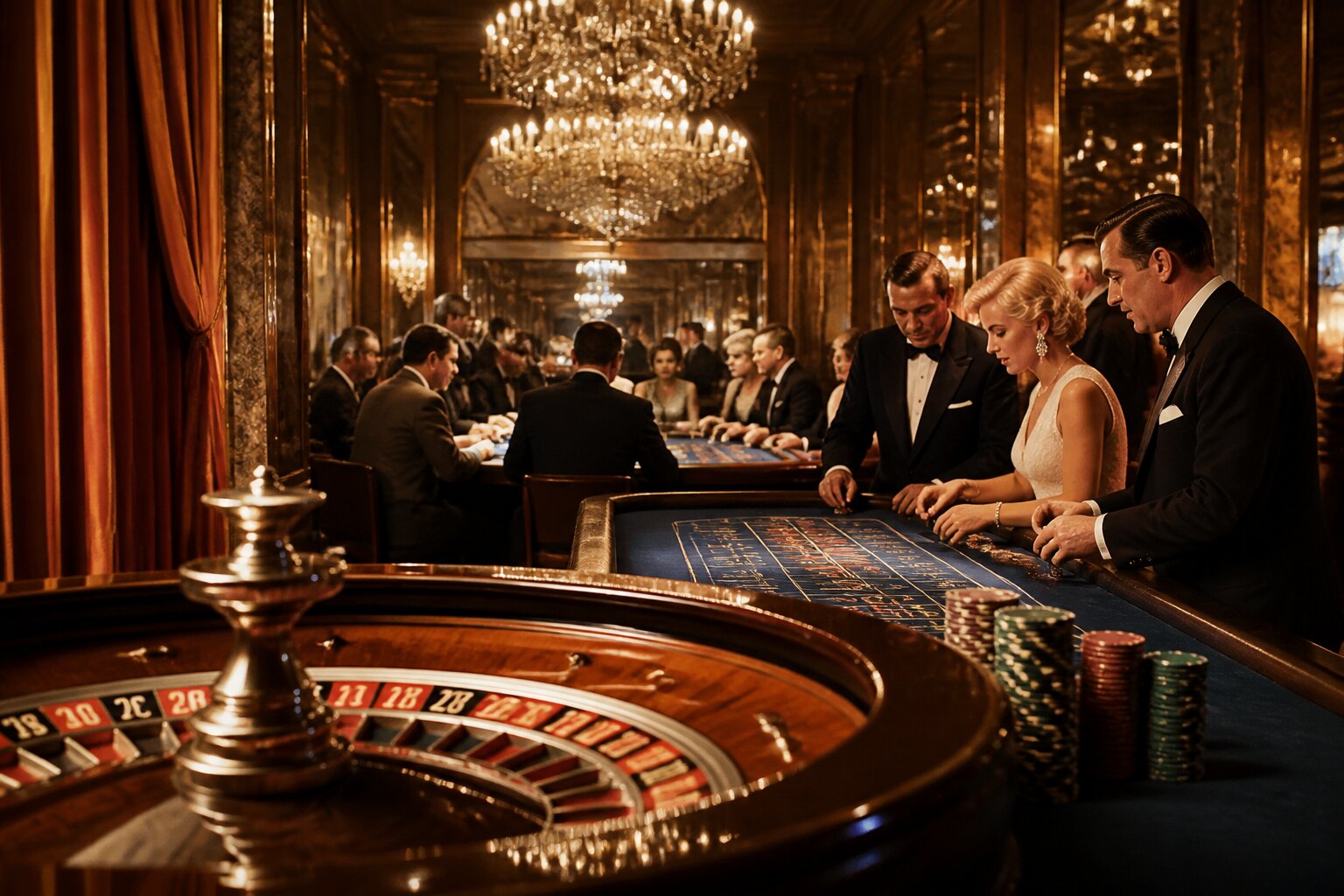
Ever wondered how Las Vegas earned its dazzling reputation as the “Entertainment Capital of the World”? It began with a handful of venues that changed a quiet desert town into a destination for games, shows and hospitality.
This article traces those early steps: the first licensed casino, the hotels that followed, the landmarks that reshaped the skyline and how the city evolved from modest gaming rooms to the modern Strip. Read on to discover the stories and structures that built Las Vegas.
What Was the First Casino Built in Las Vegas?
The first officially licensed casino in Las Vegas was the Northern Club, which opened on Fremont Street in 1931 shortly after gambling was legalised in Nevada. Prior to that, the town had informal gambling parlours, but the Northern Club was the first to hold a formal gaming licence, marking a turning point in the city’s development.
Inside, the Northern Club offered games like blackjack and poker alongside a lively social scene. Its licensing set a precedent: once casinos operated with a public, regulated profile, investment and expansion followed. That change created the conditions for the Strip and the larger, legalised industry that grew over the next decades.
How Did Early Casinos Shape Las Vegas Culture?
Early casinos became more than places to play; they were gathering spots where entertainment, dining and nightlife came together. These venues attracted performers and visitors, creating a constant flow of people and a commerce-driven momentum that expanded local services and jobs.
Cultural shifts followed the physical changes. What began as modest gaming rooms evolved into hotels with theatres, restaurants and pools. The convergence of hospitality and entertainment created a model that other cities would copy, and it shaped the city’s identity as somewhere people came to be entertained as much as to place a wager.
Casinos also affected the local economy: they generated employment across hospitality, construction and retail, and they encouraged infrastructure development that made Las Vegas more accessible. That combination of social and economic forces helped the city move from a regional stopover to an international destination.
Famous Landmarks That Changed the Vegas Skyline
The skyline of Las Vegas became a visual narrative of ambition. Early resorts introduced new themes and architectural flourishes that made the Strip an open-air showcase of ideas.
The Flamingo, opening in 1946, injected a sense of polished glamour and was one of the first to promote a resort-style experience rather than just a place to gamble. Soon after, hotels such as the Sahara, Riviera and Tropicana added distinct identities. Later additions—like the neon signage of the Stardust, the height of the Stratosphere and the Paris Las Vegas replica of the Eiffel Tower—shifted the skyline from functional to theatrical.
These landmarks acted as billboards and attractions in their own right, drawing visitors who came to see the sights as much as to visit a particular casino. The result is the Strip we recognise today: a sequence of themed destinations where architecture, showmanship and hospitality intersect.
If you’re planning to explore these sites, keep in mind that the appeal lies in both their appearance and the experiences they host, from spectacles to dining and nightlife.
Which Iconic Hotels Are Considered the Originals?
Several early hotels played a foundational role in forming the Strip’s character. Each introduced features that later became standard:
- integrated entertainment
- on-site dining
- themed environments
These elements helped shift the business model from simple boarding and gaming to full-service resorts that kept guests on site for longer stays and more activities.
El Rancho Vegas
El Rancho Vegas opened in 1941 and was the first resort on what would become the Las Vegas Strip. It combined accommodation, a casino and live shows, pioneering the resort layout that many later properties copied.
The property was destroyed by fire in 1960 and was not rebuilt, but its model lived on. Its influence can be seen in the later proliferation of larger, multi-facility resorts across the Strip.
The Flamingo
Opening in 1946, the Flamingo remains one of the oldest operating hotels on the Strip. Over the years it has been renovated and rebranded several times, yet it still represents the era when hotels began to emphasise style and spectacle to attract guests.
Its name and image became synonymous with glamour and theatrical presentation, marking a move toward more ambitious architectural and entertainment investments.
Last Frontier
The Hotel Last Frontier, which opened in 1942, brought a Wild West theme to the Strip and helped establish themed resorts as a draw. Its original buildings were later demolished in the 1960s to make way for new developments, reflecting the constant reinvention that characterises Las Vegas real estate.
The Last Frontier showed how a strong theme could define a hotel’s identity and guest experience, a strategy many later resorts adopted and expanded upon.
These hotels show how the industry moved from small-scale operations to integrated resorts that offered a full day-and-night experience. Their legacies persist in the design, marketing and entertainment choices seen on the Strip today.
How Does Old Vegas Compare to Modern Day?
Old Vegas felt smaller and more intimate, with fewer large-scale developments and a stronger focus on local social life. Fremont Street and the early Strip had a neighbourly quality where many venues relied on regulars and local tourism.
Modern Las Vegas, by contrast, expanded into large resorts with broad entertainment mixes: headline performers, fine dining, immersive attractions and convention facilities. Technological changes also altered gaming: electronic machines and digital systems reshaped how games operate and how venues manage play.
Both eras offer distinct appeals. The earlier period emphasised social gaming and simpler entertainment, while today’s city centres on large-scale experiences and a wider variety of attractions. The continuity is the city’s capacity for reinvention: old concepts were adapted rather than discarded, producing new forms of attraction that keep visitors returning.
Legacy of the First Casinos in Las Vegas
The first casinos left a lasting blueprint: integrate hospitality with entertainment, create eye-catching landmarks and build venues that invite social interaction. That approach turned Las Vegas from a small town into a global destination and continues to influence how new projects are conceived.
Their legacy is visible in the Strip’s layout, the prominence of themed resorts and the importance placed on spectacle and convenience. Alongside that heritage, modern operators emphasise regulated, safe environments for patrons and clear safeguards around play.
The story of Las Vegas shows how a few early choices grew into a city defined by hospitality, entertainment and continual reinvention.
**The information provided in this blog is intended for educational purposes and should not be construed as betting advice or a guarantee of success. Always gamble responsibly.