
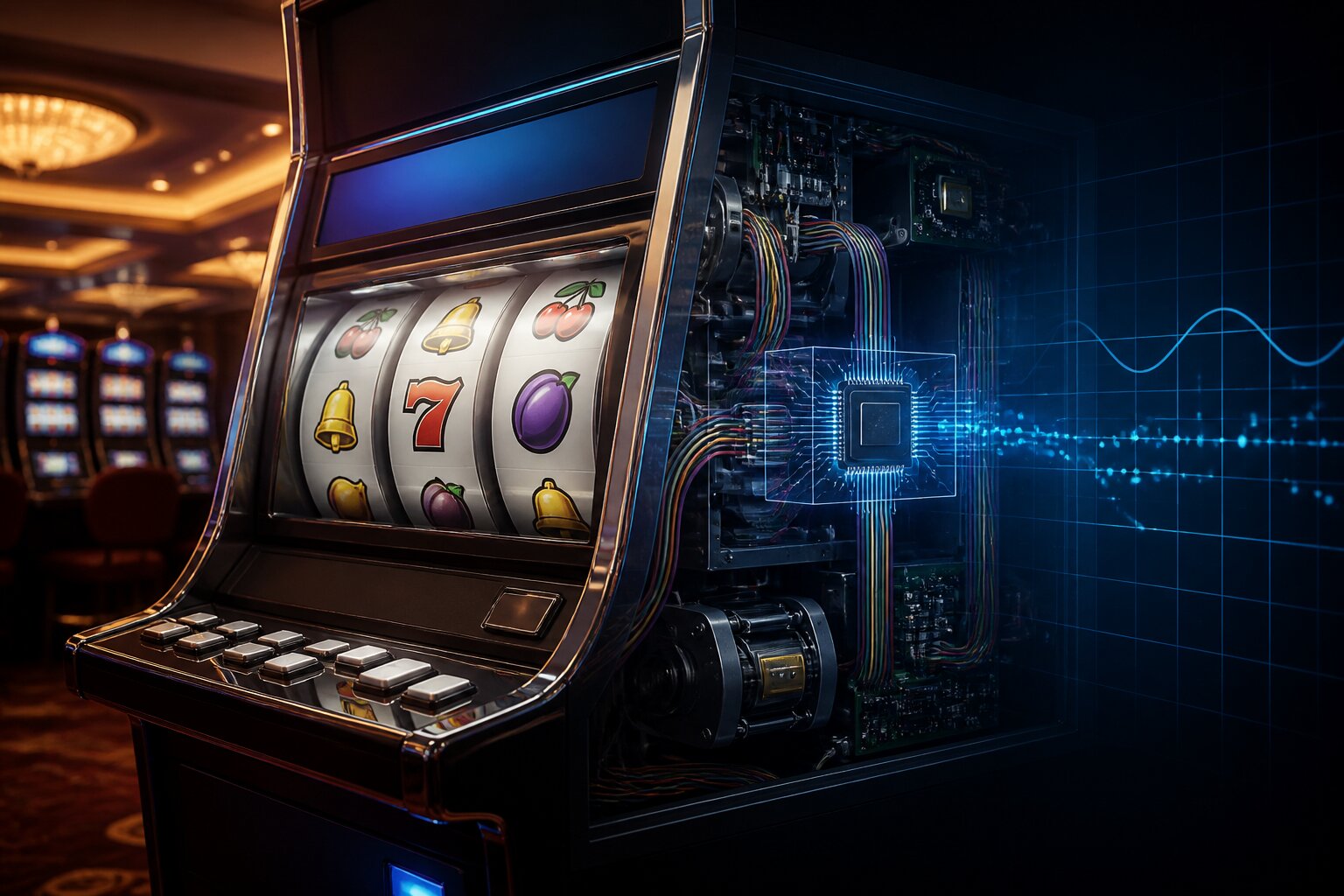
Ever wondered what really goes on behind the spinning reels of your favourite slot games? Slot machines can feel mysterious, with bright lights and catchy sounds, but there’s a precise system making everything work.
If you’ve questioned how winners are decided, or what keeps these games fair, you’re not alone. Modern slots use technology and regulation to deliver unpredictable results while giving players clear information about how the games behave.
Curious to find out how it all works? Read on to discover the mechanics, what “RNG” actually means, and the key factors that shape outcomes so you can play with confidence.
What Is a Slot Machine & How Has It Evolved?
A slot machine is a gambling device where players spin reels to try to line up matching symbols for a prize. The basic concept dates back to the late 1800s, when machines were entirely mechanical and used simple symbols like fruits and bells.
Technology steadily changed their design. Electromechanical machines appeared in the 1960s, bringing lights and sounds, while the 1980s introduced video slots that replaced moving parts with screens. The shift to online play accelerated this evolution: software now runs the game logic, displays, and bonus features, allowing for a far wider variety of themes and mechanics.
Alongside technical innovation, regulation has developed to keep pace. In the UK, machines—both physical and online—must meet standards set by the Gambling Commission to ensure fairness and transparency. The result is a long line of improvements that balance entertainment with robust controls.
How Does the Random Number Generator (RNG) Operate?
The Random Number Generator, or RNG, is the central piece of software that decides outcomes in modern slots. Every time you press “spin,” the RNG produces a numeric result that the game maps to a particular set of symbols on the reels.
The RNG treats each spin independently. It does not store a history of previous spins and it does not “aim” for particular results; the process is algorithmic and built to be unpredictable. Before any game is released, independent testing laboratories assess the RNG to make sure it behaves correctly and produces statistically random results.
These tests, together with regulatory oversight, mean players can rely on the RNG to produce unpredictable outcomes that reflect the game’s design. This separation from past spins is a key point to keep in mind as you move between different titles or sessions.
Mechanical Parts vs Digital Technology in Slots
Early slot machines relied on physical components: levers, gears and springs that set reels spinning, with mechanical stops determining where they landed. That visible machinery made the outcome easy to follow, but limited the variety of features that could be offered.
Modern slots use electronic and software systems. The reels you see may be animations driven by the RNG’s result rather than physical parts. This digital shift enables complex bonus rounds, multiple paylines, and animated graphics that would be impossible in a purely mechanical device.
Regardless of whether a machine is mechanical or digital, regulatory standards apply. Tests check that the underlying system—physical or electronic—meets the same requirements for producing fair, verifiable results. The move from metal gears to code changed how games look and feel, but not the need for independent checks.
What Determines a Slot Machine’s Outcome?
While the RNG creates the immediate result of a spin, game design choices set the overall behaviour of a slot. These choices include the number of reels and symbols, the arrangement of paylines, and the probabilities attached to each symbol combination.
A central concept here is the payout rate, often referred to as Return to Player or RTP. RTP is expressed as a percentage and represents the average amount a game will return to players over a very large number of spins. For example, a game with a 96% RTP will, in theory, return £96 for every £100 wagered across a long timeframe.
It’s important to understand that RTP is a long-term statistical measure. Short sessions can vary substantially from the average, because each spin is determined independently by the RNG. Game features such as wilds, scatters, free spins and progressive jackpots also influence variance, meaning some games pay out smaller, frequent wins while others offer rarer but larger prizes.
Payout Rates & Return to Player: What Do They Mean?
RTP gives context to how a game is expected to behave over time. Operators must make this information available, and independent testing bodies verify the RTP claims during certification. Players can use RTP as one factor when choosing a game, alongside volatility and features that match their preferences.
Remember that RTP is not a promise about any single session; it’s an indicator of long-term behaviour. A balanced approach to play considers both the RTP and the type of experience the game offers, such as whether it leans toward frequent small wins or occasional larger payouts.
Are Slot Machines Really Random?
Yes, properly regulated slot machines use RNGs that produce outcomes without reference to past spins or outside interference. Independent testing labs run statistical checks to ensure the patterns of results are consistent with randomness, and regulatory bodies require these checks as part of the certification process.
This setup addresses common misconceptions about predictability. Machines do not keep score of recent results to “even out” wins, nor do they respond to how much a player has bet in a way that would alter the RNG’s fundamental behaviour. The combination of certified RNGs and regular audits forms the backbone of that assurance.
Common Myths About Slot Machine Randomness
Several persistent myths suggest patterns or timing can be exploited to force a win. For instance, the ideas that a machine is “due” after a losing stretch or that certain play times increase odds are unsupported by how RNGs and tested game logic operate.
Other myths propose betting strategies can reliably change outcomes. While betting levels may affect stake sizes and how many spins a player can afford, they do not alter the RNG or change the probabilities encoded by the game’s design.
Knowing how randomness and RTP interact helps separate fact from fiction and keeps expectations realistic.
How Are Slot Machines Regulated in the UK?
In the UK, slot machines must comply with requirements set by the Gambling Commission. These rules cover technical standards for RNGs, certification of payout rates, and disclosure of key game information. Accredited testing laboratories examine software and hardware to confirm that games meet those standards before being offered to players.
Regulation also extends to transparency. Operators must provide accurate game information, and audits ensure ongoing compliance. This regulatory framework aims to protect players by enforcing independent verification and clear, accessible information about how games perform.
Operators also need to follow rules related to player protection, including measures that help people manage their play. Those safeguards evolve as technology and market practices change, keeping the framework relevant to both online and land-based gaming.
Why Understanding Slot Machine Mechanics Matters for Players
Understanding the mechanics of slots equips players to make informed choices. Knowing that the RNG governs each spin, and that RTP describes long-term averages, helps set realistic expectations and reduces the appeal of myths or risky behaviours.
Being informed also makes it easier to pick games that suit your preferences, whether you prefer lower volatility with steadier returns or higher volatility with the chance of larger payouts. Looking at RTP, reading about features, and checking variance give a clearer picture of what to expect from a title.
If you want further advice on safe play or tools to manage gambling, organisations such as BeGambleAware provide confidential guidance and support. It’s sensible to use available settings and self-assessment tools to keep play within personal limits.
Play with knowledge, choose games that match your aims, and enjoy the experience as a form of entertainment with clear expectations about how outcomes are determined.
**The information provided in this blog is intended for educational purposes and should not be construed as betting advice or a guarantee of success. Always gamble responsibly.