
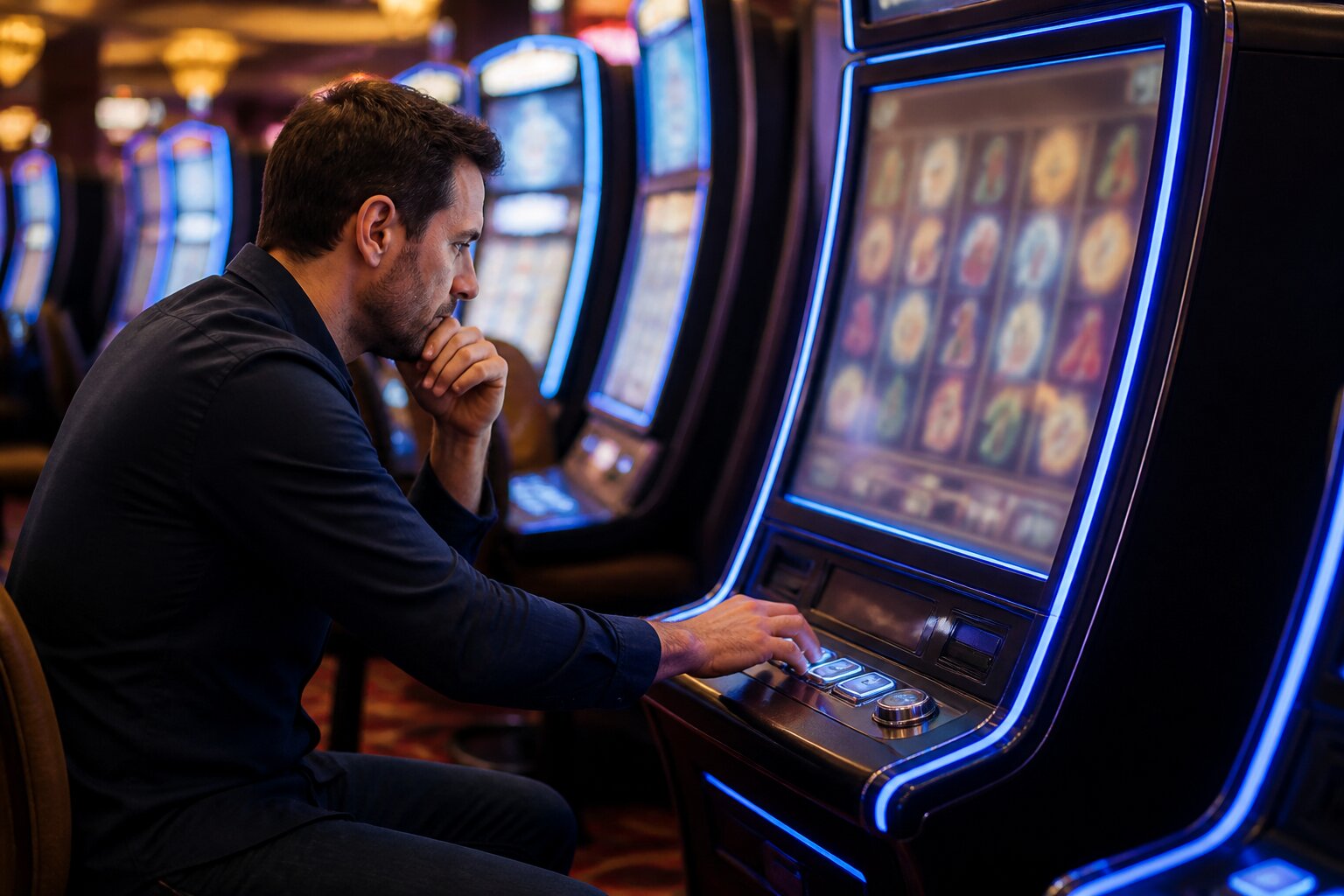
Ever wondered if a slot machine can actually be ‘full’ or ‘maxed out’? You’re not alone—many players ask what that phrase really means and whether it matters when choosing a machine.
There’s a lot of chat on casino floors and online about payout cycles, jackpots and whether a machine is “due”. Before you spin again, it helps to separate what those conversations are based on from how modern machines actually work.
Read on and we’ll explain what happens inside a slot, which signs are genuinely relevant and which are just myths, so you can make informed choices about your play.
What Does It Mean for a Slot Machine to Be Maxed Out or Full?
When people call a slot machine ‘maxed out’ or ‘full’, they usually mean the machine has collected enough money that a big win is imminent, or that it has reached a capacity that will prevent further payouts. Historically, that idea came from older mechanical machines that handled physical coins, where jams or full hoppers were visible and led to stories about machines being “primed” to pay.
Modern regulated slots work very differently. They use computer systems and certified random number generators (RNGs) to decide each spin. Those systems do not track past intake in a way that changes future outcomes, and they do not switch behaviour because of a machine’s recent activity. Instead, each spin is an independent event governed by the game’s programming and regulatory standards.
That means the phrase ‘maxed out’ is essentially a holdover from a different era. While physical capacity issues can still arise on old coin-operated devices, they are maintenance problems rather than indicators of impending wins. In today’s regulated environments, outcomes are determined by chance and by the game’s set return-to-player (RTP) and volatility, not by how much has been played into a machine.
Key Signs a Slot Machine May Be Full
Older land-based machines sometimes showed practical signs that they needed attention: coins jamming in the hopper, notes not being accepted, or service lights indicating a full cash box. Staff would clear these so the machine could keep operating. Those are straightforward technical issues, not signals of an impending payout.
Other commonly mentioned “signs”—such as long runs of losses, recent big wins nearby, or machines that look neglected—are not reliable. They reflect patterns people notice, but they do not reflect any change to the random process that governs spins. For digital and modern mechanical machines, there’s nothing visible that can reliably predict a payout.
If you’re evaluating a machine, focus on practical things that matter to your experience: is it functioning correctly, is the game you enjoy available, and are the stakes suitable for your budget? Those factors affect how much you enjoy play and how long your funds last, which is more useful than chasing perceived signals.
Does a Machine Stop Paying Out When Full?
A persistent worry is that a machine might stop paying because it is “full” or has reached a preset limit. In practice, machines do not stop awarding wins because of the amount they have taken in or paid out. Where physical capacity matters, it’s only in the sense of a maintenance issue that staff need to fix so the machine continues to operate normally.
Regulated games are tested to ensure consistent behaviour regardless of play history. A machine’s recent activity does not alter the odds or the underlying RNG process. If a machine requires service because of a jam or a full hopper, staff procedures restore normal operation; they do not change the way the game determines outcomes.
Understanding this can help avoid chasing myths about timing or “due” wins. Instead, concentrate on choosing games that suit your preferences and bankroll and on recognising when a session is no longer enjoyable.
The Role of Casino Staff in Monitoring Full Machines
In land-based venues, floor staff and technicians keep games running: emptying cash boxes, clearing malfunctions, and responding to service lights. Their tasks are operational and safety-focused, ensuring machines are available and compliant with technical standards.
It’s important to be clear about what staff do not do: they have no influence over the RNG or the way outcomes are generated. Maintenance and auditing processes are separate from game logic. For online platforms, similar functions occur behind the scenes through software maintenance and security monitoring, rather than physical intervention.
Knowing this helps set realistic expectations. If a machine is taken out of service it’s for repair or inspection, not because it has “given out” its wins. That distinction matters when evaluating stories you hear on the floor or online.
It’s worth mentioning that regulatory oversight and regular testing by independent bodies are in place to keep these processes transparent and consistent.
Can Players Tell If a Slot Is Ready to Pay?
Some players talk about “hot” or “cold” slots and claim to detect when a machine is ready to pay. In regulated environments, there’s no objective way to determine that. Certified RNGs mean spins are independent, and past outcomes have no bearing on the next result.
Believing you can read a machine’s current state can encourage risky habits, such as increasing bets after a long losing run in the hope of recovering losses. A more productive approach is to consider the game design: RTP, volatility and jackpot structure influence how often wins occur and how large they tend to be, but these are statistical properties of the game, not immediate signals about the next spin.
If you’re curious about a game’s behaviour, check published information from the operator about RTP and volatility. That gives a clearer picture of what to expect over many plays, rather than relying on anecdote or folklore.
Common Myths About Maxed-Out Slot Machines
A handful of persistent myths keep circulating: machines are “due” after a dry spell; staff can trigger wins; or visual cues on the floor indicate a payout is imminent. These ideas persist because humans naturally seek patterns, but they don’t hold up against how modern games are designed and regulated.
Where these myths have any basis, it is historical—mechanical coin issues or anecdotal coincidences—not technical reality. Licensed operators must use tested RNGs and meet regulatory standards, and independent auditors verify that games behave as described.
Clearing up these misconceptions helps you make calm, practical decisions about play. Focus on choosing games that match your appetite for risk and on setting limits that keep the experience positive.
FAQs About Slot Payouts and Capacity
Below are answers to questions players commonly ask about payouts and whether a machine’s capacity affects results.
Do slot machines have a payout limit?
No. Slots do not stop paying out because they have collected a certain amount. Modern games operate on RNGs and are designed to behave consistently over time. What matters instead are the game’s published RTP and volatility, which describe long-term behaviour rather than short-term certainty.
Can a slot machine become ‘full’ and stop paying?
Physical machines can experience full hoppers or jammed cash boxes, which require staff intervention. That is a maintenance issue and does not change the machine’s payout mechanics. For digital games there is no physical capacity to fill, so this is not a concern.
How do I know slots are fair?
Regulated games are tested by independent laboratories and overseen by gaming authorities to ensure outcomes are generated correctly and fairly. Operators publish technical information, and audits help verify that RNGs and payout percentages meet required standards.
If play stops feeling enjoyable, support is available through organisations such as BeGambleAware. Keep to limits you set for yourself and treat gambling as a form of entertainment rather than a way to achieve a specific outcome.
Final note: understanding the difference between technical maintenance issues and how outcomes are determined helps you make clearer choices on the casino floor or online. Stick to games that fit your budget, be aware of how they behave over time, and play with control so the experience remains positive.
**The information provided in this blog is intended for educational purposes and should not be construed as betting advice or a guarantee of success. Always gamble responsibly.