
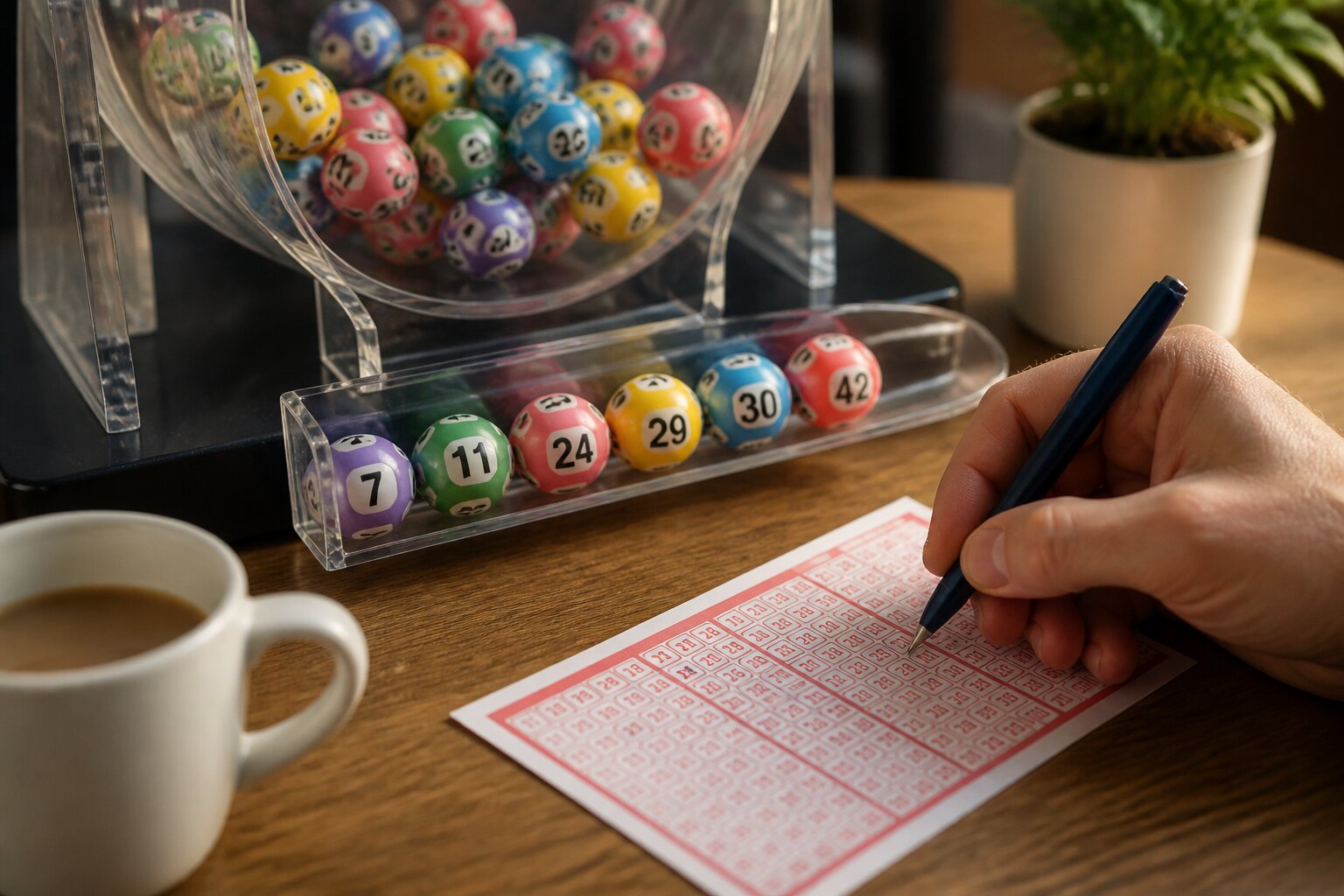
Dreaming of a big win can be exciting, but understanding the rules and realistic chances makes the experience clearer and more enjoyable. This guide explains how many numbers you need to match for each prize, what the odds look like at every tier, and how prizes are paid.
Play responsibly and only spend what you can afford. With that in mind, let’s start with how the game is structured and what happens on draw night.
How Does the UK Lotto Work?
The UK Lotto is a straightforward numbers game played twice a week, on Wednesday and Saturday evenings. Players must be at least 18 to buy a ticket, whether in person or through authorised online services. There is an option to pick your own numbers or to have six numbers generated at random for you. Each play costs £2, and tickets must be bought before the published deadline on the day of the draw.
During the draw, six main numbers are selected from a pool of 1 to 59, followed by a single Bonus Ball drawn from the remaining numbers. The Bonus Ball only affects one prize tier and is not used for other prize calculations. Every line you enter competes on equal terms with every other line in that same draw. Next, we’ll look at what matching different numbers actually wins you.
Required Number Matches for Different Prizes
Prizes depend on how many of the six main numbers on your ticket match those drawn. Tiers range from matching two numbers up to matching all six. The Bonus Ball matters only for players who match five of the main numbers; if the sixth number on a ticket is the Bonus Ball, that produces a higher prize than five main numbers alone.
Matching two main numbers typically earns a free random-number entry for a future draw. Matching three numbers secures a defined cash prize, while four and five matches bring larger fixed sums. Match all six and you win the jackpot, which can be worth millions depending on ticket sales and previous rollovers. Each tier has its own odds and typical prize levels, which we will examine next.
Jackpot: How Many Numbers Needed?
To claim the jackpot you need to match all six main numbers drawn. This is the top prize and, although rare, it represents the highest single payout in a given draw. Because the jackpot is funded by ticket sales and any carryover from previous draws, its value changes from draw to draw.
Lower Tier Prizes: Fewer Matches, Smaller Wins
Lower-tier prizes scale down from the jackpot. Two matching numbers award the entry credit already mentioned. Three and four matches produce modest cash prizes, suitable for a smaller financial boost, while five matches deliver a significantly larger amount. If that fifth match is paired with the Bonus Ball, the prize rises further. Those differences matter when considering the realistic returns at each level.
Bonus Ball: What Difference Does It Make?
The Bonus Ball is drawn after the six main numbers and only changes the outcome for the five-number tier. If a ticket has five main numbers plus the Bonus Ball, it qualifies for a higher prize than a plain five-number match. For every other tier, the Bonus Ball is irrelevant. Understanding this makes it easier to see why certain prize amounts differ even when two tickets share the same number of main matches.
Now that you know what each match can yield, the next section breaks down the mathematical chances of each outcome.
What Are the Odds of Winning the Lotto?
Odds are determined by the number of possible combinations when selecting six numbers from a pool of 59. Every line you play has an identical mathematical chance of matching any particular combination of numbers, and those probabilities remain constant from draw to draw.
Calculating Your Chances
The chance of matching all six main numbers and winning the jackpot is about 1 in 45 million for each line. That figure comes from the combinatorial maths behind choosing six numbers from 59, calculated as the number of different six‑number combinations possible. It illustrates just how uncommon a jackpot win is, even though many people play each week.
The number of tickets sold in a draw does not alter the odds for a single line. What it can do is increase the likelihood of sharing a prize if more than one ticket contains the winning combination, which may reduce an individual payout.
How Do Odds Change by Prize Level?
As the required number of matches decreases, the odds of winning improve. For five numbers plus the Bonus Ball, the odds are about 1 in 7.5 million, while for five main numbers alone the odds are roughly 1 in 144,000. Matching four numbers has odds near 1 in 2,180, three numbers about 1 in 97, and matching two numbers is the most likely outcome at about 1 in 10. Each tier represents a different balance between how common wins are and how large the payouts tend to be.
With the probabilities clear, the following section explains how the game is run and the regulatory safeguards in place.
Understanding Lotto Rules and Draw Formats
The draw uses a consistent 6-from-59 model with a single Bonus Ball drawn from the remaining numbers. Age checks and verification procedures are in place to ensure only eligible players participate. Tickets may be purchased through approved retail outlets or authorised online channels before the published cutoff for each draw.
Draws are conducted under independent oversight to maintain transparency and fairness, and the system is regulated to guard against tampering and error. Operators must protect player information, make support available for anyone who needs it, and follow strict standards for security and auditing. These measures help maintain public confidence in the integrity of the game and its results.
Next, learn how prizes are distributed depending on how you bought your ticket and how large the win is.
How Are Lotto Prizes Paid Out?
Prize payments depend on ticket purchase method and the value of the win. Small prizes from tickets bought in shops can often be collected at retail outlets, up to a set limit. Larger claims require submitting a winning ticket to an approved centre or contacting the official operator, with identity verification required for high-value payments.
For online purchases, lower-tier prizes are usually paid directly into the player account shortly after results are confirmed. Larger online wins may involve an additional verification process before funds are released. Keep tickets safe and check results promptly, because lost tickets cannot be redeemed. All payments are processed under the same regulatory framework that governs draws, ensuring secure and traceable transfers.
Having covered how prizes reach winners, the final section addresses some common misunderstandings that can affect how people approach playing.
Common Myths About Winning the Lotto
A number of persistent misconceptions can skew expectations. One is the idea that some numbers are more likely to be drawn than others; the draw mechanism treats every number equally, so there is no numerical advantage to particular choices. Another mistaken belief is that buying more tickets guarantees a win. While additional tickets do increase the total number of chances, they never create certainty.
Systems or patterns claimed to predict outcomes have no statistical basis. Playing should remain a form of entertainment, with an understanding of the game’s rules, prize structure and probabilities. If play ever stops feeling enjoyable or becomes financially concerning, support and tools are available to help manage participation and maintain control.
This completes the overview of how many numbers you need to match, what the odds are at each level, and how prizes are handled. Keep the facts in mind, play within your means, and check official channels for the latest rules and prize information.
**The information provided in this blog is intended for educational purposes and should not be construed as betting advice or a guarantee of success. Always gamble responsibly.