
Ever wondered why some slot machines seem packed with different symbols, while others keep it simple? If you’ve ever been curious about what really goes on behind those spinning reels, you’re not alone.
Understanding how reels and symbols work can make playing more interesting and help you recognise what’s happening during a spin. In this post we’ll explain the mechanics, the terminology and the design choices that shape every game.
Dive in to discover what’s behind the symbols on each spin and how that affects what you see on screen.
What Is a Slot Machine Reel?
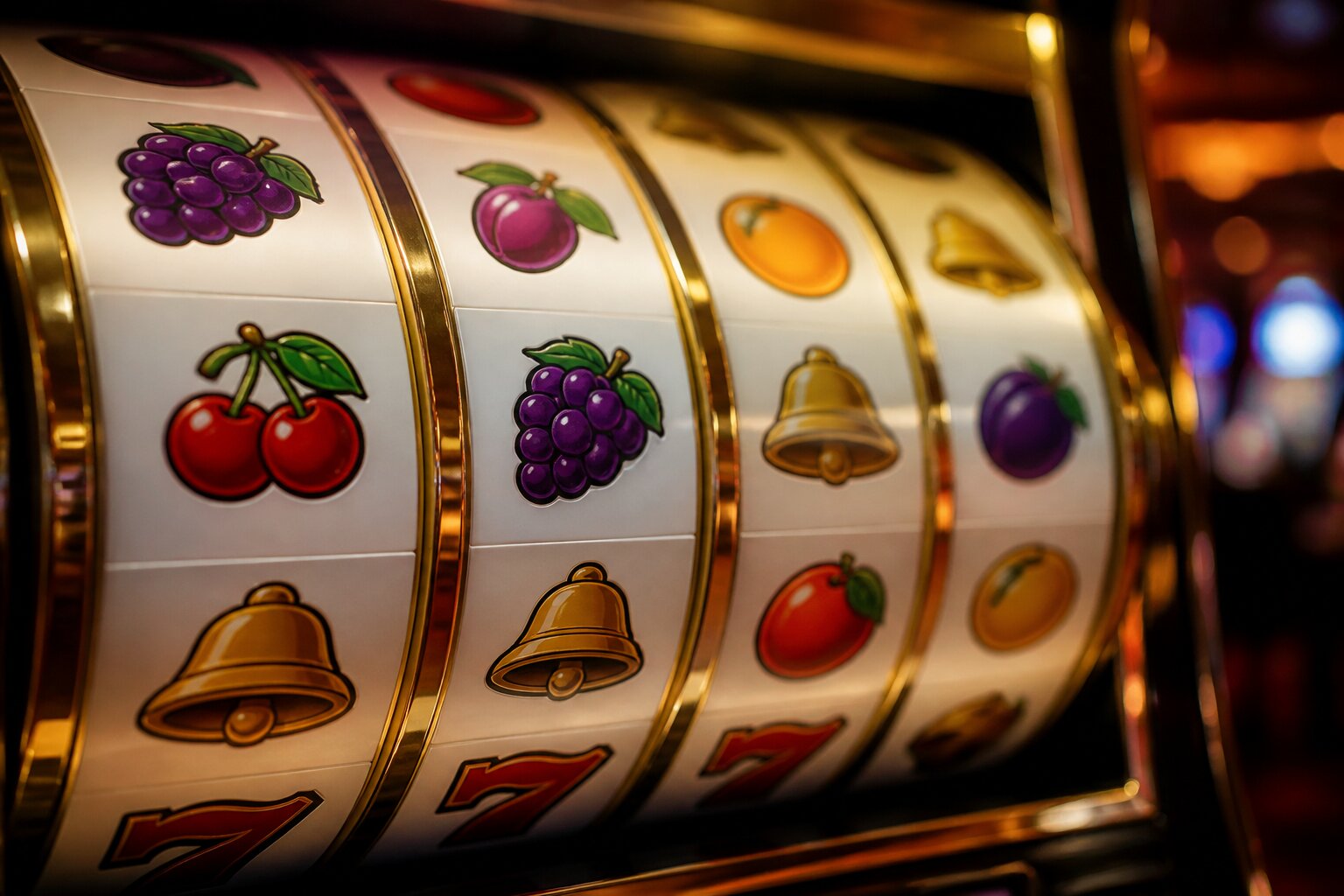
A slot machine reel is the vertical column that displays symbols as it spins. In older land-based machines these are physical cylinders with pictures printed around them; in modern games the reels are represented on a screen but still serve the same purpose.
When a reel stops it shows one of the symbol positions aligned with the payline. That alignment — across one or more payline paths — is what determines outcomes according to a game’s rules. The visual motion and the pause on particular symbols are mainly an interface: the underlying result is determined by the game’s software.
Whether you see real metal reels or animated graphics, the reel is the visible element that links the game’s internal process to the result you observe.
How Do Symbols Work on Reels?
Symbols are the icons or pictures placed in the positions around a reel. Each game chooses its own symbol set to match a theme or to support specific features. Typical categories include low-value symbols (often based on playing cards), higher-value themed symbols, and special symbols such as wilds or scatters.
Standard symbols form the bulk of combinations that produce payouts. Special symbols usually interact with the game’s bonus mechanics: wilds substitute for other symbols to complete combinations; scatters trigger bonus rounds or free spins based on how many appear, regardless of payline position.
Behind the scenes, the game’s configuration defines how frequently each symbol appears on the reel. That distribution is part of the design and is reflected in the paytable and game documentation.
How Many Symbols Are Typically Found on a Reel?
Symbol counts vary with the style of the slot. Older, mechanical reels commonly display around 20–25 symbol positions per reel. Many classic online conversions follow similar counts, while contemporary video slots can emulate 30–50 positions or use virtual reels that allow even more varied distributions.
Designers adjust the number to suit a game’s pace and feature set: fewer positions can speed up play and make specific symbols feel more prominent; more positions let designers layer in bonus triggers and varied symbol weighting without changing the visible layout.
The exact number is a design choice rather than an indicator of better or worse performance: it’s part of how a developer balances frequency of wins, feature activation and overall player experience.
Why Do the Number of Symbols Vary Between Machines?
The variation comes down to technology and design goals. Physical reels are limited by the mechanics and the cylinder’s circumference, so they hold a fixed number of printed positions. Digital reels aren’t constrained in the same way, so developers can create virtual reels with more positions and complex weighting.
Choices about symbol count also support specific game mechanics. For instance, a developer may spread high-value symbols thinly across many positions to make them rare, or cluster bonus symbols on certain virtual stops to shape how often special features occur.
These decisions affect the game’s rhythm and the frequency of different outcomes, and they’re all deliberate parts of the development process.
Physical Reels vs Digital Reels: What’s the Difference?
Physical reels are tangible components found in traditional machines. You can hear the mechanism operate, and on some machines you can also see parts of the reels turning. Their behaviour is determined by mechanical stops and physical properties, so maintenance, wear and alignment matter for how they perform and sound.
Digital reels are graphical representations controlled by software rather than moving parts. They can reproduce the look and feel of mechanical reels while offering extra flexibility. Digital implementations allow effects such as:
- cascading symbols
- expanding reels
- variable reel heights
These effects would be difficult or impossible to achieve with mechanical hardware alone.
Both types present symbols to the player, but digital technology adds further options behind the scenes. It lets developers change symbol weighting, add hidden positions that are not shown on the display, or present visual effects that make the same underlying mechanics feel different. For example:
- symbol weighting can be adjusted without altering hardware
- hidden positions can affect outcomes without being visible to the player
- visual effects can enhance the perceived variety of play
In all cases, the visible reels are an output layer that sits on top of the game’s internal systems. What the player sees is a representation of those systems rather than the full picture of how outcomes are determined.
What Are Blank Spaces and Do They Count as Symbols?
Blank spaces are reel positions that display no visible icon. On older mechanical machines you might notice actual gaps between pictures; in digital games the equivalent can be managed invisibly by the software.
Although blank spaces don’t show an image, they still occupy positions in the reel map and therefore play a role in distribution. Landing on a blank position simply means there’s no matching symbol in that spot; it won’t form part of a winning combination. Game documentation sometimes accounts for these positions when explaining symbol weighting and hit frequency.
Understanding that blank positions are part of the reel design helps explain why some symbols appear more or less often than they seem to.
How Do Reel Symbols Affect Winning Combinations?
Symbols form combinations according to a game’s paytable, which lists what each combination pays and how special symbols interact with features. Paylines, cluster rules or ways-to-win systems define which symbol alignments count.
The frequency with which particular symbols appear on the reel — their weighting — determines how often certain combinations are possible. This is how designers balance common, smaller wins against rarer, larger outcomes and bonus activations. The overall behaviour of these elements is set in the game’s configuration and reflected in published return-to-player information.
If you want to compare games, looking at the paytable and feature descriptions gives a clearer picture of how symbols influence outcomes than simply observing a few spins.
Common Myths About Reel Symbols Explained
There are several persistent misconceptions about reels and symbols. One is that past results influence future spins; they do not. Each spin is independent, with results determined by the game’s internal random number process. Another myth is that certain symbols become due after a series of non-appearances; the distribution of symbols on the reel map does not change during play to make specific icons “due.”
People sometimes believe they can spot a machine that is about to pay more or that watching previous spins reveals a pattern. In reality, the game’s configuration and randomness mean observed streaks are just short-term variation rather than predictable signals.
Clearing up these misunderstandings helps set realistic expectations about how symbols and reels behave.
Choosing the Right Slot Machine: Does Reel Size Matter?
Personal preference plays a big role in choosing a slot. Three-reel games tend to be simpler and quicker to follow, while five-reel or multi-row games often include more features and visual variety. Some players prefer the straightforward layout and pace of classic designs; others enjoy the complexity and bonus possibilities of modern video slots.
Reel size and symbol count don’t change the fairness of a game. All reputable games are assessed to ensure outcomes are delivered as intended and that published information about returns is accurate.
Deciding what suits you best comes down to which features you enjoy and how you like the game to feel. If you prefer clearer, quicker outcomes, smaller reel configurations can be more satisfying; if you like frequent feature interactions, larger or more complex reels tend to offer that.
Personal Preference
Choosing a slot often reflects how you want to engage with the game. Simpler reels can make it easier to track symbols and paylines, while larger virtual reels let developers layer in more mechanics such as expanding symbols, bonus wheels, or additional paylines. Think about what keeps the experience enjoyable for you and pick games that match that style.
No Impact on Guaranteed Outcomes
Reel size is part of design, not an assurance of better odds. Game fairness and outcome distributions are set by the developer and subject to testing and regulation. Comparing features, volatility and paytables will give a better sense of a game’s character than focusing solely on symbol counts.
Playing Responsibly
Keep play within a budget and choose session lengths that suit you. Awareness of your spending and taking regular breaks are sensible ways to keep the activity enjoyable. If you ever feel play is becoming a problem, seek independent advice and support resources that can help you reassess your approach.
If you want to try different styles, our site lists games by format and features so you can find reels and symbol layouts that match your preferences.
**The information provided in this blog is intended for educational purposes and should not be construed as betting advice or a guarantee of success. Always gamble responsibly.