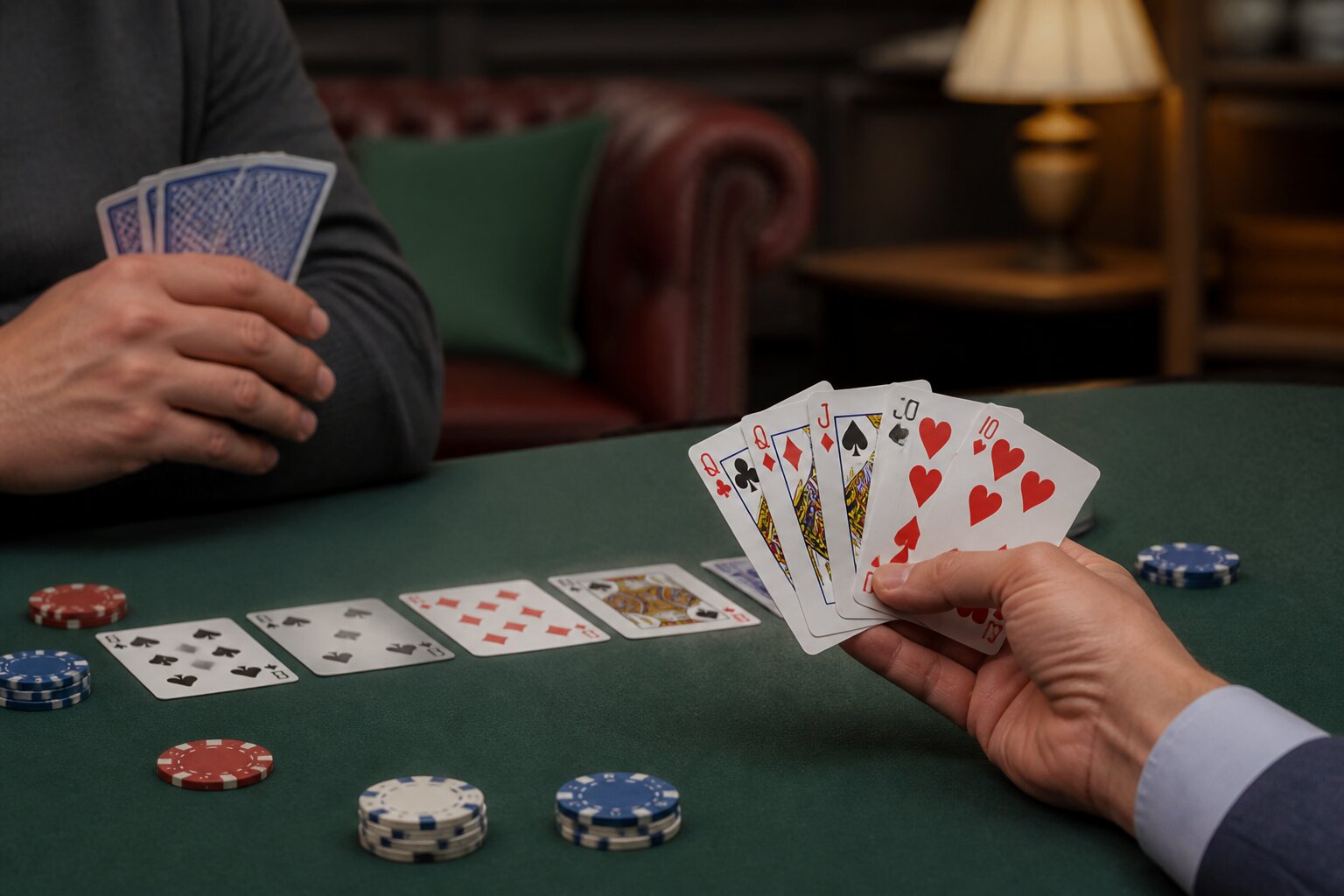
Fancy trying something a bit different at the poker table? HORSE Poker could be the perfect change of pace. This mixed game combines five classic poker variants into a single rotation, asking you to rethink strategy with every round.
Whether you’re curious about the rules or ready to broaden your skills, this guide walks you through what to expect and how the game flows. Keep reading and by the end you’ll feel more confident joining a HORSE table.
What Is Horse Poker?
HORSE Poker is a mixed poker format made up of five different variants. The name comes from the first letter of each game: Hold’em, Omaha Hi-Lo, Razz, Seven Card Stud, and Stud Eight-or-Better (Stud Hi-Lo).
Players move through these games in a fixed order, typically switching either after a set number of hands or following a timed rotation. That structure means the game tests a wide range of abilities — from hand-reading in Hold’em to split-pot decisions in Hi-Lo rounds and the unique low-hand considerations in Razz.
This variety is why HORSE is commonly used in tournaments and among experienced players who want a broader challenge than a single-variant session offers.
This guide is for adults aged 18 or over. Play within sensible limits and be aware of the rules wherever you choose to join a game.
How Do You Play Horse Poker?
Playing HORSE involves rotating through the five variants in sequence, with each round played according to the rules of the current game. Table stakes and bet sizes usually remain consistent, but the way you play changes dramatically from one variant to the next.
All players start with the same chip stack and take turns dealing as required by the venue or house rules. The typical order is Hold’em, Omaha Hi-Lo, Razz, Seven Card Stud, then Stud Eight-or-Better. Once the group finishes a round in one variant, they move to the next, continuing the rotation until the session ends or the tournament structure dictates otherwise.
Adapting your tactics is the central skill in HORSE. Familiarity with hand rankings, showdown dynamics, and how betting rounds differ between variants makes a big difference in performance. It's also important to decide beforehand what stake level you are comfortable with and to manage your play accordingly.
Horse Poker Rules Explained
Because HORSE combines five distinct games, understanding how each one contributes to the overall structure is essential. The session’s fairness depends on consistent dealing practices, agreed betting limits, and clear signals when the game changes.
The dealer button indicates who deals each hand and dealing duties rotate in line with the button. Players typically start with equal stacks so that no one has a positional or financial advantage at the outset. Blinds or antes, and how they are posted, should be set and understood before play begins.
If a house or venue has specific rules about who rotates the dealer, how breaks are handled, or what happens to forced bets when the variant changes, those should be agreed at the table before play begins. Agreeing these details up front avoids disputes and keeps the game running smoothly.
Basic Setup & Dealing
Betting is most commonly fixed-limit, which sets clear small and large bet amounts for the different betting rounds. Fixed-limit gives structure and reduces sudden swings in stake sizes, which helps maintain a level playing field and encourages skillful play.
The cards are dealt in the manner required by the variant in play, so make sure everyone recognises the current game before the cards go out. Announce the variant clearly, and, where relevant, remind players of ante or blind changes and any house-specific rules.
Sequence of Play
The standard HORSE rotation is:
- Hold’em
- Omaha Hi-Lo
- Razz
- Seven Card Stud
- Stud Eight-or-Better
Play proceeds in that order and repeats until the session ends. Announcing the upcoming variant clearly before each round helps players switch mindsets and prepare their strategies.
Betting Rules & Structure
Fixed-limit betting is the usual choice in HORSE, so players should be prepared for fixed increments on raises and bets across all variants. While the monetary amounts remain steady, several aspects change with each game, including:
- the number of betting rounds
- how many cards are dealt and when
- which hands win or split the pot
That means you need to think not only about the size of your action but also about timing and hand construction within each variant’s structure. Playing with agreed limits and clear procedures gives everyone a predictable framework, which helps keep the competition focused on skill and decisions rather than on quick swings in stake sizes.
What Makes Horse Poker Different From Other Poker Games?
HORSE distinguishes itself by forcing players to be versatile. Instead of concentrating on one set of strategies, you must switch between distinct decision frameworks: community-card play in Hold’em and Omaha, low-hand thinking in Razz, and the street-action and stud-reading skills required in Stud variants.
This constant change rewards those who can evaluate hands from several angles, spot opportunities across different formats, and adjust their aggression according to the variant. The format also exposes weaknesses quickly; a strength in one game might be a liability in another, so balanced knowledge is an advantage.
Because of that mix, many players find HORSE more mentally engaging than single-variant games, and it often becomes a proving ground in mixed-game tournaments.
Can You Play Horse Poker Online?
You can find HORSE Poker online, though it appears less often than plain Hold’em or Omaha. Some reputable online poker platforms include HORSE in tournament schedules or during special mixed-game events, giving players a chance to try the rotation without travelling.
When choosing an online venue, use operators that hold appropriate licences and provide clear terms and player protections. Make sure you meet the minimum age requirement for your jurisdiction and avoid sites that do not offer transparent information on betting limits, fees, or dispute procedures.
Playing online can be a convenient way to gain experience in HORSE before joining a live mixed-game table.
Common Myths About Horse Poker
There are a few misconceptions that tend to circulate about HORSE Poker.
One is that strength in a single variant guarantees success across the whole rotation. In practice, proficiency in each game matters, because weaknesses are exposed when the format changes. Another myth claims HORSE is substantially easier or offers better returns than other poker formats; the reality is that it simply distributes the strategic demands differently and requires broader skills.
A related belief is that HORSE is strictly for experts. While the learning curve is steeper than for a single-variant game, players with solid basics in Hold’em, Omaha, and Stud games can participate and improve through practice.
Above all, view HORSE as a test of adaptability and breadth of knowledge rather than as an easier path to consistent wins.
Essential Poker Terminology for Beginners
Knowing common poker terms makes following HORSE rounds much simpler and helps you read the table confidently. Below are core terms you’ll encounter frequently at mixed-game tables.
Ante
A small compulsory contribution to the pot placed by every player before the hand begins, commonly used in Stud games. Antes create initial action and encourage more betting, because there is already something to win each hand.
Blinds
Mandatory bets placed by the two players to the left of the dealer in Hold’em and Omaha, creating an initial pot and ensuring action. The player immediately left of the dealer posts the small blind and the next player posts the big blind. Blinds rotate around the table each hand so everyone contributes equally over time.
Fold
Withdrawing from the current hand by discarding your cards and yielding any claim to the pot. Folding saves chips when your hand looks uncompetitive, but you forfeit any chance of winning that particular pot.
Check
Passing the action to the next player without betting when no bet has been made in the current round. Checking is only allowed when there is no outstanding bet to call; it keeps you in the hand for free but gives other players the option to bet.
Raise
Increasing the amount required to call in response to an existing bet. Raises can be used to build the pot, to gain information about opponents, or to apply pressure. In some games there are limits on how much you can raise in a single action, in others you can raise any amount within table rules.
Pot
The total sum of chips or money wagered during a hand, awarded to the winning player(s) at showdown or when all other players fold. Pots can include the main pot and one or more side pots when players are all-in for different amounts.
Showdown
The stage where remaining players reveal their hands to determine who wins the pot according to the rules of the current variant. At showdown the best hand, or the best combination according to that game type, collects the pot; if hands are identical, the pot is split according to the rules.
Familiarity with these terms reduces hesitation at the table and helps you focus on adapting strategy as the game changes. Staying clear on basic terminology also helps with responsible play and making informed decisions.
Where Can You Learn and Practise HORSE Poker in the UK?
There are several accessible ways to learn and practise HORSE Poker without taking on high stakes.
Online Poker Platforms
Some established online operators run mixed-game events or offer HORSE during tournaments. These platforms often provide low-stakes or play-money tables where you can experiment with different variants and build experience at a comfortable pace.
Local Poker Clubs
Occasional mixed-game nights at clubs or casinos can include HORSE. These settings let you observe how dealers and experienced players handle rotations and split-pot situations, which is especially useful for Stud and Omaha Hi-Lo rounds.
Useful Resources
Books, reputable poker training sites, and forums offer in-depth articles and example hands that demonstrate key concepts across the five variants. Studying sample hands and watching mixed-game streams can speed up understanding of how strategy shifts from one game to the next.
Whichever route you choose, progress comes from exposure and reflection: try sessions that match your comfort level, review hands afterwards, and gradually widen the stakes as your understanding grows.
Play within your limits and enjoy the learning process; HORSE rewards steady improvement and a willingness to adapt.
**The information provided in this blog is intended for educational purposes and should not be construed as betting advice or a guarantee of success. Always gamble responsibly.