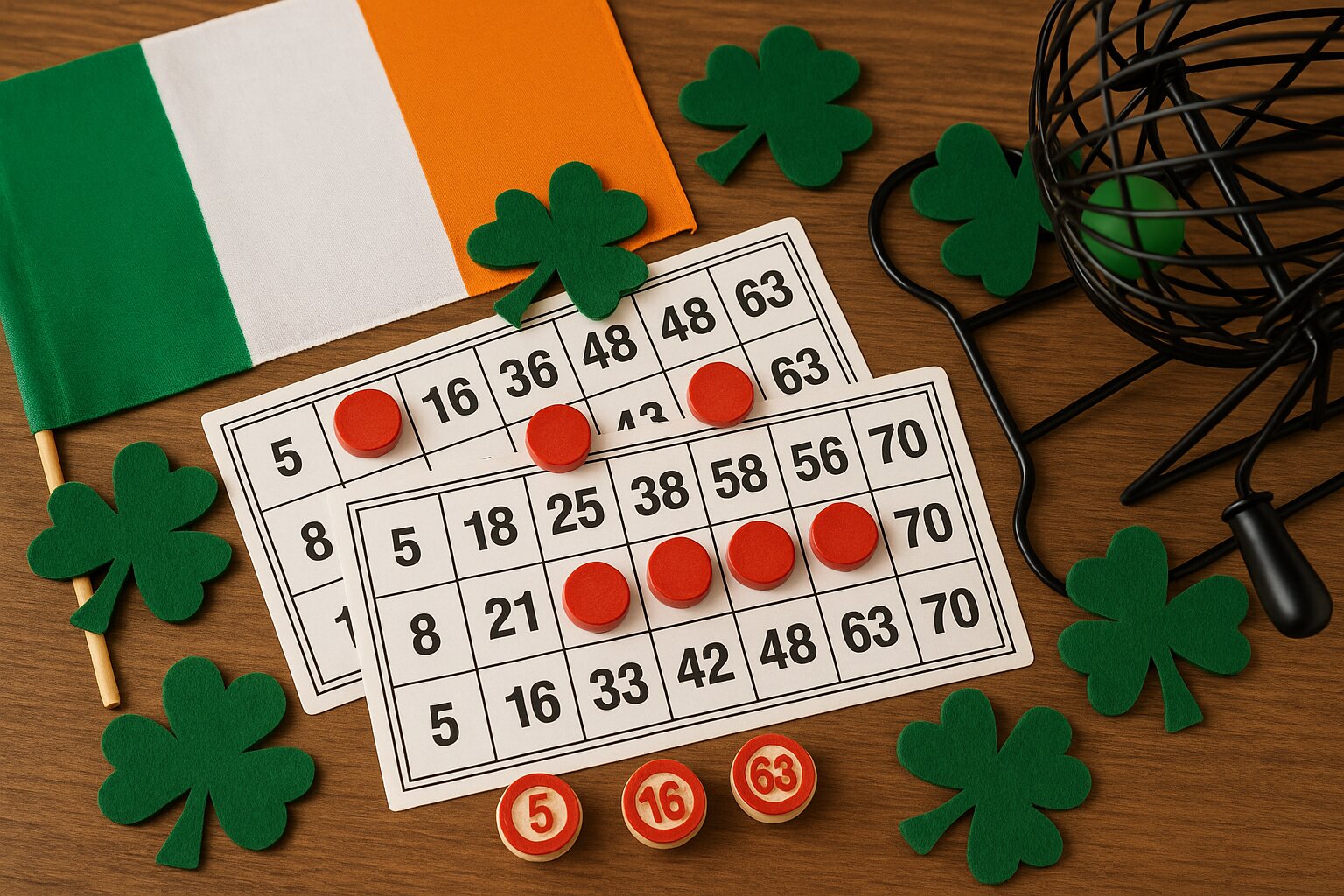
Irish Bingo is one of the liveliest ways to have fun, whether you’re at a local hall or enjoying a game online. With its straightforward gameplay and a distinctive Irish twist, it appeals to people who enjoy social games with personality.
In this article you’ll discover what sets Irish Bingo apart, how the game plays out, and the most popular Irish bingo calls that give it character. We keep things clear and practical so both new players and those revisiting the game can follow along.
Remember, bingo is entertainment, not a way to make money. Play responsibly and only take part if you are aged 18 or over.
What Is Irish Bingo?
Irish Bingo is a variation of the familiar 90-ball bingo format, shaped by social gatherings and community events in Ireland. Players use tickets printed with number grids and listen as numbers are announced, marking matches as they go.
What gives Irish Bingo its identity is not the ticket layout but the atmosphere. Callers often use playful phrases and local references when announcing numbers, turning a routine draw into a social event. That humour and local colour are part of why the game has spread beyond Ireland into neighbouring communities.
Although it shares the same basic rules as other 90-ball games, Irish Bingo places extra emphasis on the social side of play, which often shows up in the way games are hosted and how callers engage with the room.
How Do You Play Irish Bingo?
Playing Irish Bingo is easy to follow. Players obtain one or more tickets, each showing a random set of numbers in a grid. During a game the caller draws numbers from 1 to 90 and announces them to the players, who then check their tickets and mark any matching numbers.
Prizes are usually awarded for completing specific patterns on a ticket. Common targets include a single line, two lines, and a full house where all numbers on a ticket are marked. When a player believes they have achieved a winning pattern they must indicate this clearly so the caller can verify the ticket before play continues.
Online play mirrors the in-room experience but uses software to draw and display numbers. The essential point is uniformity: every number has an equal chance of being drawn and the process is governed by clear rules so the game remains fair and transparent.
If you are taking part, it helps to set personal limits on time and spending and to take breaks when needed.
What Are The Main Differences Between Irish And Traditional Bingo?
On the surface Irish Bingo and traditional 90-ball bingo look very similar, but there are a few differences in presentation and context. The most obvious is the distinct set of calls used in Irish games. These phrases often reference Irish culture, place names, or local jokes and are delivered in a way that keeps players engaged.
Irish Bingo is commonly associated with charity events and social gatherings, which encourages a more conversational style of hosting. Traditional bingo in larger halls can be more formal and focused on the gameplay itself.
The rules, ticket format and number range remain the same across both styles, so anyone familiar with 90-ball bingo will adapt quickly. What changes is the tone of the session and the way the caller interacts with players.
If you enjoy a sociable experience with a bit of local colour, Irish Bingo offers that in a package that is otherwise familiar to players of standard 90-ball games.
What Are The Most Popular Irish Bingo Calls?
A defining feature of Irish Bingo is the catalogue of distinctive calls that replace plain number announcements. These calls are intended to entertain and to keep the mood light while play continues. They vary by region and by the caller’s own style, which means no two sessions are exactly the same.
These phrases are entirely decorative and have no effect on the draw or a player’s chances. Their role is to create rapport and provide a bit of character during the session.
Traditional Irish Bingo Call Examples
Below are some examples of the kind of calls you might hear. Each one reflects a cultural reference or a playful image rather than altering how the game works.
- Number 8 – O’Hara’s Gate: a nod to a common surname and a familiar local reference.
- Number 17 – St. Patrick’s Day: referencing Ireland’s national feast day.
- Number 25 – Dublin’s Alive: a phrase celebrating the capital city.
- Number 32 – Half a Crown for You: an old currency reference that adds a nostalgic touch.
- Number 45 – Dancing Jive: a call that evokes music and movement.
- Number 90 – Top of the Shop: a traditional bingo phrase often used to close a session.
Local variations are common, so when you attend a new hall or switch to a different online room you may hear fresh or regional lines. That variety is part of the charm and keeps regular sessions feeling familiar yet lively.
Can You Play Irish Bingo Online?
Irish Bingo is widely available online, with games designed to reproduce the atmosphere of a physical hall. Most sites use the same 90-ball format and keep the familiar patterns and prize structures, so the experience will feel like playing in person. Callers’ lines are often recorded or scripted to keep that sense of personality even in a virtual setting.
Age verification and account controls are standard when playing online. Operators will check that you are of legal age before you can play, and it is an offence for under‑18s to gamble.
Responsible gambling tools are commonly provided and include:
- deposit limits to control how much you add to your account;
- time limits or session reminders to help manage how long you play;
- reality checks and cool-off periods to pause play for a set time;
- self-exclusion options to close an account for a longer period;
- access to account history so you can review your spending and activity.
If you are worried about your play, operators usually provide information about support services and how to get help. Organisations such as BeGambleAware and GamCare offer confidential advice, practical tools and further information about safer gambling.
Why Is Irish Bingo So Popular In The UK?
Irish Bingo has found a steady following in the UK because it combines familiar gameplay with a sociable hosting style. The distinctive calls and the atmosphere of banter make sessions feel welcoming and inclusive, which suits social events, fundraisers and evenings out with friends.
Cultural connections and shared community traditions have helped the game spread beyond its origins, while the straightforward 90-ball format makes it accessible to many people. Whether played in local halls or online, Irish Bingo appeals to those who enjoy a friendly, communal approach to a simple game.
If you are curious, trying a single session is a good way to see how the format and calls work in practice. Enjoy the experience for what it is: a social game that brings people together.
Final note: play only if you are 18 or over and treat bingo as a form of entertainment rather than a way to make money.
**The information provided in this blog is intended for educational purposes and should not be construed as betting advice or a guarantee of success. Always gamble responsibly.