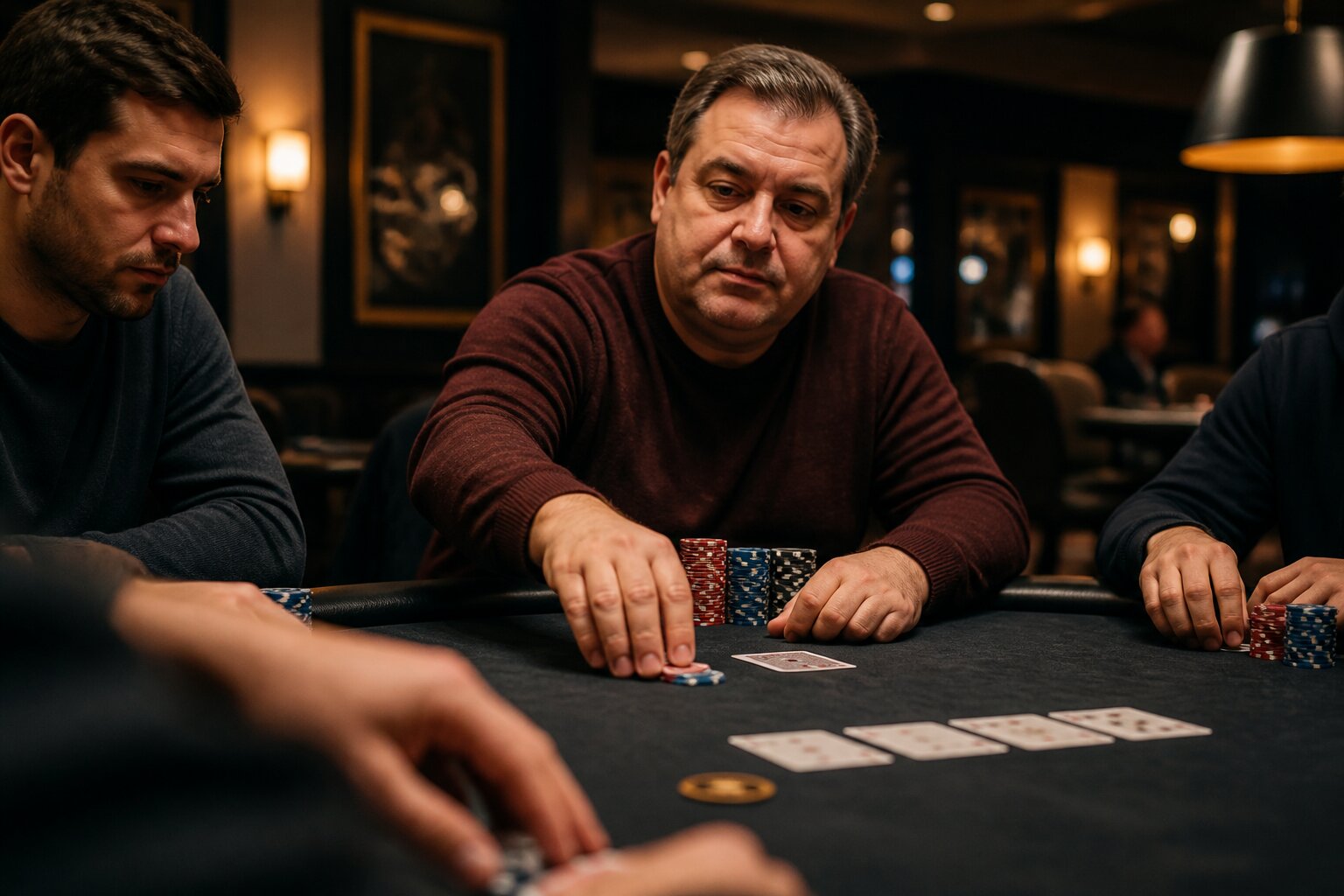
Ever noticed someone at the poker table who just cannot seem to fold their cards, no matter how big or small the bet? Perhaps you have sat there, holding your breath while another player calls every single hand, refusing to raise or back down even when the board looks unfavourable. It can be equal parts frustrating and bewildering to watch.
These players are commonly called “calling stations”. They turn up in cash games and tournaments, online and live, and their predictable behaviour creates clear patterns you can learn to read. Understanding why they play this way and how to respond will help you make better choices at the table.
Read on to learn what defines a calling station, how to recognise one, and how to adjust your strategy to get the most out of the situation.
What Does 'Calling Station' Mean in Poker?
A calling station is a player who calls most bets and rarely folds or raises. They tend to stay in hands far longer than the strength of their cards justifies, preferring to match bets rather than apply pressure. That predictability makes their playstyle distinct: when they enter a pot they are unlikely to fold until the showdown.
Picture a cash game where one opponent calls pre-flop, calls the flop, and calls the turn and river, even when the board strongly favours other players. That pattern — staying to the end with marginal holdings — is the hallmark of a calling station. Their continual presence in pots means they will see many more showdowns than most players and create different incentives at the table.
This tendency exposes them to a negative expectation over many hands, because calling down with weak holdings usually results in paying too much to see final cards. The rest of the table can use that expectation to adapt their approach and extract value. The next section points out the common behaviours that make a calling station easy to spot.
Typical Behaviours of a Calling Station
Calling stations share a set of clear behaviours that make them easy to identify. They almost always call bets instead of folding or raising, they routinely check and call through multiple streets, and they frequently chase draws or marginal holdings rather than conceding the pot when the situation looks poor.
For instance, a calling station holding a low pair facing a sizeable flop bet will usually call rather than fold or raise. If they miss a draw on the turn, they are likely to call again, hoping the river will improve their hand. They rarely put pressure on others by raising, which means they give up the initiative while remaining in the hand.
Because they remain to showdown so often, calling stations can win occasional large pots by catching a needed card, but over the long run their pattern of frequent calls tends to be a losing approach under sound play. Recognising these behaviours early helps you decide whether to push for value, tread carefully, or change bet sizing to extract more.
If you can spot these signs, the following checklist makes them easy to confirm at the table.
Signs You Are Playing Against a Calling Station
Frequently calls bets before and after the flop, no matter the bet size
Rarely, if ever, raises the pot or makes aggressive moves
Will often call all the way to the river, even with weak hands
Regularly stays in hands just to see the next card or to reach showdown
Chases draws or unlikely winners with little hesitation
Seldom folds in response to larger or unexpected bets
Often matches river bets without strong justification
These indicators should be treated as patterns rather than guarantees. No single action confirms an opponent is a calling station, and short-term variation can produce misleading behaviour.
Observe these tendencies over several hands to form a reliable read. Use the information to adjust your strategy, such as value betting thinner or bluffing less often, but remain flexible because opponents can change their approach.
Always make decisions based on the full context: stack sizes, table dynamics and the specific history between you and the player. Responsible play means acknowledging uncertainty and managing risk while exploiting clear, repeated tendencies.
How to Adjust Your Strategy vs. Calling Stations
When a calling station is at your table, adjust to extract value rather than try to force folds. Bluffing is less effective against players who call down often. Instead of attempting elaborate bluffs, concentrate on straightforward value plays and avoid thinning the pot with slow play when the hand is likely best. Patience is useful here: let the calling station’s tendency to call work to your advantage over multiple hands rather than chasing individual setbacks.
Maintain emotional control and bankroll discipline when facing a calling station, since their occasional unexpected wins can be frustrating. Keep bets proportional to the hand’s strength and your overall strategy, and respect your pre-set limits to avoid poor decisions born of irritation. Responsible play is always important; set limits before you start and stick to them.
Read on for a concrete example that shows these ideas in action.
Real-World Example of a Calling Station in Action
Imagine a £0.50/£1 No Limit Hold'em cash game. You are on the button with Ace of hearts and King of clubs (A♥ K♣), and an opponent in the big blind displays calling-station tendencies.
Pre-flop: You raise to £3. The opponent calls with 8♣ 6♠.
Flop: K♦ 7♠ 2♣. The opponent checks, you bet £4, and they call.
Turn: 4♣ appears. The opponent checks again. You bet £7, and they call a second time with just 8-high.
River: J♦ completes the board. The opponent checks, you bet £15, and they call, revealing the missed draw and weak holding.
This example shows a player who calls each street despite holding a marginal hand, illustrating how value bets can be sized to capitalise on such behaviour. It also demonstrates why bluffing less and betting more for value tends to be the better route versus a calling station.
Next, consider how a calling station affects the overall dynamics of a game.
Impact of Calling Stations on Poker Games
Calling stations change table dynamics by increasing pot sizes and reducing the effectiveness of bluffs. Because they call down often, more money tends to stay in pots until the river, which can make games financially larger and more volatile. Players who identify a calling station will usually switch to extracting value rather than trying to push them out.
This shift often leads to fewer bluffs from experienced players and a greater focus on bet sizes that reward strong hands. At the same time, calling stations raise the potential for surprising showdowns, where modest holdings can win simply because the opponent called too many bets. Those outcomes add variety to the game and force other players to think differently about risk and reward.
Understanding these effects helps you adjust from hand to hand and view the calling station as a factor that changes how the table should be played. The final section dispels common misunderstandings about this playing style.
Common Misconceptions About Calling Stations
Calling stations are often misunderstood, and two common misconceptions deserve correction.
Are All Passive Players Calling Stations?
No. Passive play and calling-station behaviour are distinct. A passive player may fold frequently and only enter hands with strong starting holdings, exercising discipline and restraint. A calling station, by contrast, stays in many pots by calling across streets regardless of hand quality. The difference lies in whether the player selectively avoids marginal situations or routinely pays to see further cards.
Can a Calling Station Ever Win Consistently?
Calling stations can experience profitable stretches and may take down big pots from time to time by seeing showdowns more often. However, their repeated pattern of calling with weak hands creates a negative expected value in the long run compared with disciplined, selective play. Over many sessions, strategic opponents who adjust their bet sizing and value-betting approach can exploit calling stations to achieve better results.
Recognising the distinction between short-term results and longer-term expectation helps set realistic goals at the table and keeps strategy focused on sound decisions rather than one-off outcomes.
Enjoy Table Games at Barbados Bingo
Fancy a bit of fun? We invite you to gather with us and enjoy the great table gaming experience our site has to offer.
It is easy to set yourself up: just create an account, make a deposit and you can begin playing when you are ready. We look forward to welcoming you to the tables.
**The information provided in this blog is intended for educational purposes and should not be construed as betting advice or a guarantee of success. Always gamble responsibly.