
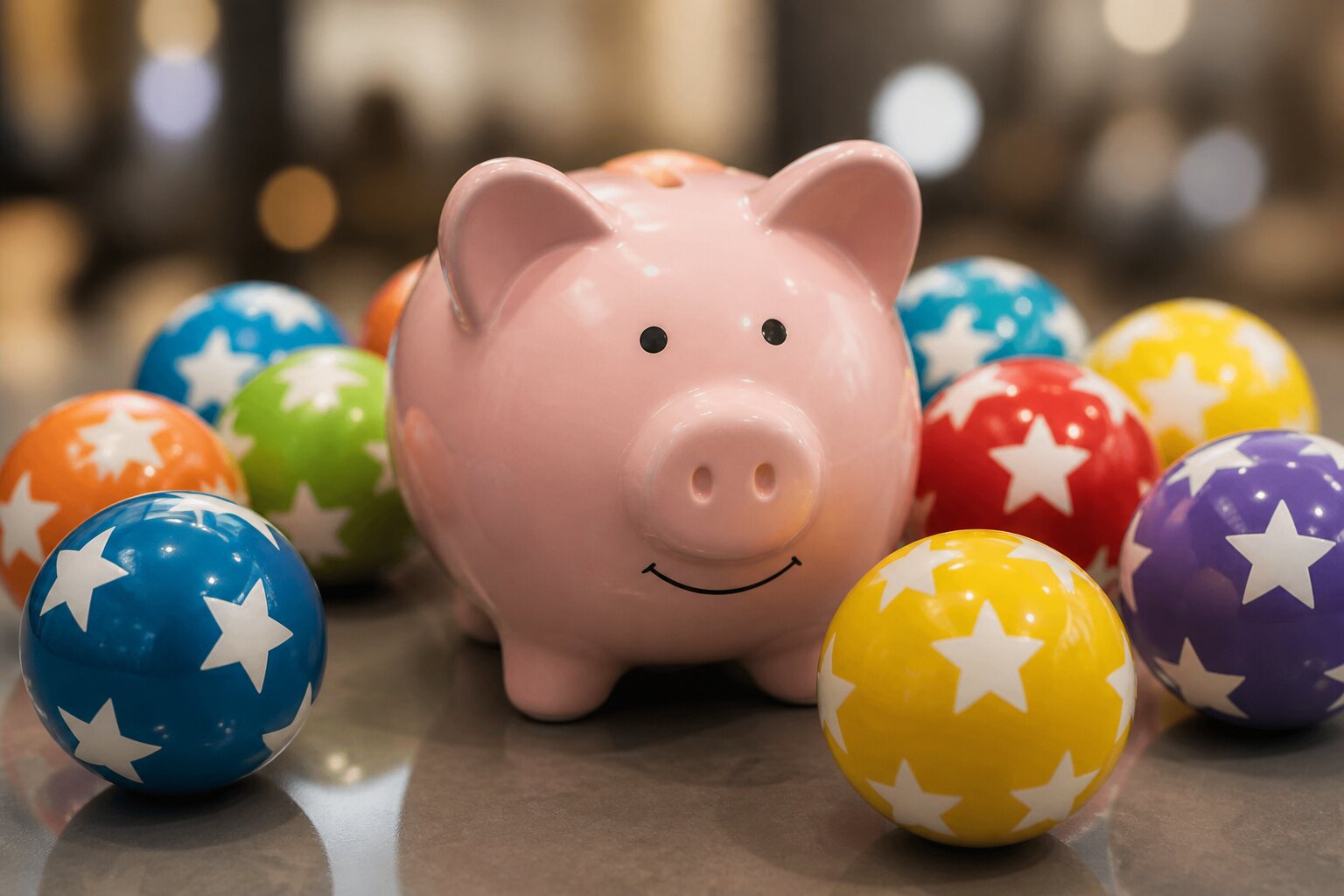
Ever wondered whether Premium Bonds or the Lottery suits you better?
Both offer the possibility of a cash prize, but they work in quite different ways and carry different practical trade-offs. This guide explains how each scheme operates, what you can realistically expect to win, and the key points to consider when deciding between them.
If you want to weigh where your money might be best used, read on to compare structure, odds and what happens to any winnings.
How Do Premium Bonds Work?
Premium Bonds are a government-backed savings product issued by NS&I. Instead of earning a set rate of interest, each £1 you invest buys one Bond number that is entered into a monthly prize draw. You can buy Bonds from a minimum holding and hold up to the personal limit; your capital is generally accessible and can be withdrawn when required.
The monthly draws use random-number equipment to select winning Bond numbers; prizes range from modest sums up to two monthly jackpots of £1 million. Prizes are tax-free, and the size of the overall prize fund depends on the amount held in Bonds and the prevailing prize rate. Because returns are not guaranteed, the main financial trade-off is that your money sits in a safe place but does not accrue a predictable return, and inflation can erode purchasing power over long periods.
If you want a sense of how this compares with a conventional game of chance operated by the National Lottery, the next section shows how that system is organised.
How Does the Lottery Operate in the UK?
The National Lottery and its associated games sell tickets for a chance to win cash prizes from pooled ticket sales. Tickets are purchased at authorised outlets or online, and different games have different entry prices and draw schedules. The main Lotto game is drawn twice weekly, while events like EuroMillions and Thunderball operate on their own timetables and rules.
Each lottery game matches combinations of numbers to a set drawn at random; prizes vary by how many numbers match and whether any jackpots have rolled over. Winnings are paid as lump sums and are tax-free. A portion of ticket sales is allocated by law to prize funds, charitable causes, retailers and operating costs. Age and residency rules apply to participation and prize claims.
With an understanding of how each system is set up, the next step is to compare the chances of actually winning something.
Comparing Odds: Which Is Easier to Win?
Both products present long odds, but the way those odds are expressed differs.
Premium Bonds publish a monthly odds figure per £1 Bond for winning any prize; this reflects the number of eligible bonds and the size of the prize fund. The chance of winning the top £1 million prize is far lower than the chance of receiving one of the lower-tier prizes. Lottery games state odds per line for each prize tier: the main Lotto jackpot is around 1 in 45 million for a six-number match, while EuroMillions extends into much larger odds for its top prize.
Neither system offers a means to improve the mathematical odds: each Bond number or ticket line competes on its own, independently of past draws. Understanding how likely different prize tiers are will help set realistic expectations before spending on either product.
Comparing those probabilities makes it clearer why prize structures are arranged as they are—so let’s unpack how prizes are distributed.
Prize Structures Explained
Prizes for both Premium Bonds and lottery games follow fixed rules tied to the outcome of random draws, but the practical experience of winning differs between the two. The mechanics may look similar at a glance, because both rely on chance, yet the frequency, size and distribution of awards vary in ways that affect what a win actually feels like.
Premium Bonds Prize Breakdown
Each registered Bond number is entered into the monthly draw and can win at different prize tiers, from the smallest awards up to the two £1 million jackpots. The total monthly prize fund is determined by the prize rate applied to the value of eligible Bonds, so the amount available for prizes changes with the stock of Bonds and the declared rate. Most individual wins are at lower tiers, which means many small prizes are paid out while large wins are scarce.
Prizes are drawn at random and the odds of any particular Bond winning are the same, but because there are far more low-value prizes than high-value ones, most successful entries will result in modest sums. All awards are tax-free and paid directly to the bondholder, normally into the bank account registered with the National Savings and Investments service.
Lottery Prize Categories
Lottery prizes are awarded according to how many numbers on a ticket match those drawn. Small matches return modest sums or free plays, while full matches can pay large jackpots. Some games fix certain prize amounts, others scale with ticket sales, and some jackpots may be shared between multiple winners.
Because prize pools and odds differ between lottery products, the likely outcomes and the way prizes are split will vary from game to game. Jackpots that grow with ticket sales can reach very large sums but may also be shared if there are multiple winning tickets. As with Premium Bonds, lottery prizes are tax-free and distributed according to the game’s published rules, which set out how winnings are calculated and paid.
Knowing how prizes are allocated helps when assessing what a win would actually mean for you, and that in turn links to the tax position for any winnings. Understanding the frequency and likely size of prizes, as well as how payments are made, provides a clearer picture of the practical differences between holding Premium Bonds and buying lottery tickets.
Tax Implications: Are Winnings Tax-Free?
Prizes from both Premium Bonds and national lottery games are currently free from Income Tax and Capital Gains Tax in the UK. This applies regardless of prize size for Premium Bonds and for lottery jackpots and tiered prizes alike.
You do not normally need to declare these winnings on a tax return because they are not taxable income. However, the money you receive could still affect other elements of your financial situation. For example, a large windfall might have implications for means tested benefits or for financial assessments carried out by lenders, even though the prize itself is not taxed.
Tax rules can change, and individual circumstances may affect how any windfall interacts with other elements of personal tax affairs. For specific, up-to-date advice, consult official guidance or a tax professional.
With tax treatment clarified, it is worth checking who is eligible to take part in each option.
Who Can Buy Premium Bonds or Lottery Tickets?
Eligibility differs between the two. Premium Bonds can be held in a young person’s name by a parent or guardian, and are issued to UK residents who meet the minimum age requirement for bond-holders. Lottery tickets require the buyer to be over 18 and to be located within the UK or Isle of Man when purchasing.
These requirements are backed up by routine checks. Retailers and online platforms may ask for proof of age or use electronic age verification and location checks to make sure buyers meet the rules. In practice, this means some online purchases may be blocked or delayed if the provider cannot confirm age or residency at the point of sale.
The rules are enforced to ensure lawful participation and to protect younger people from gambling-related harm. Providers also follow regulatory guidance designed to prevent underage access, including staff training and clear messaging about minimum age limits.
Next, consider the practical risks and other points to weigh before deciding to buy Bonds or lottery tickets.
Risks and Considerations
Both choices involve significant risk of not receiving any financial return. Premium Bonds provide capital accessibility and government backing of the nominal amount invested, yet the lack of a guaranteed interest return means real value may decline relative to inflation. Lottery tickets are a one-off spend per draw: if the numbers do not match, the money is not recoverable.
Only one responsible-play note is included here: set limits that match what you can afford to lose, and seek help if play becomes a source of worry. Support is available from specialist organisations and helplines that offer confidential assistance. Understanding these risks will help you decide which option, if any, fits within your wider financial picture.
Which Option Is Right for You?
Choosing between Premium Bonds and lottery games depends on personal priorities. Premium Bonds suit those who want to preserve access to capital while accepting uncertain returns and a regular chance of small prizes. Lottery games appeal to people aiming for larger, singular jackpots, with the trade-off that each ticket represents a definite outlay and no stored capital.
Think about how you will view the outcome if nothing is won and whether taking part aligns with your budget and priorities. Treat either option as entertainment rather than an investment, and choose the approach that fits your comfort with risk.
If you want to explore available options or see current prize rates and odds, the site provides comparisons and practical details to help you decide. Whatever you choose, make sure it sits comfortably within your overall finances and leave matters there with a clear decision in mind.
**The information provided in this blog is intended for educational purposes and should not be construed as betting advice or a guarantee of success. Always gamble responsibly.