
If you’ve ever played blackjack and seen the word “push” on the table or screen, you might have wondered what it actually means. It’s a simple outcome, but one that can confuse newer players and affect how they interpret results.
This article explains what a push is, when it happens, how it affects your stake and how it compares with wins and losses. Along the way you’ll find practical examples so you recognise a push at the table and understand its place in the game.
Read on to clear up that uncertainty and follow the same rules every time you play.
What Is a Push in Blackjack?
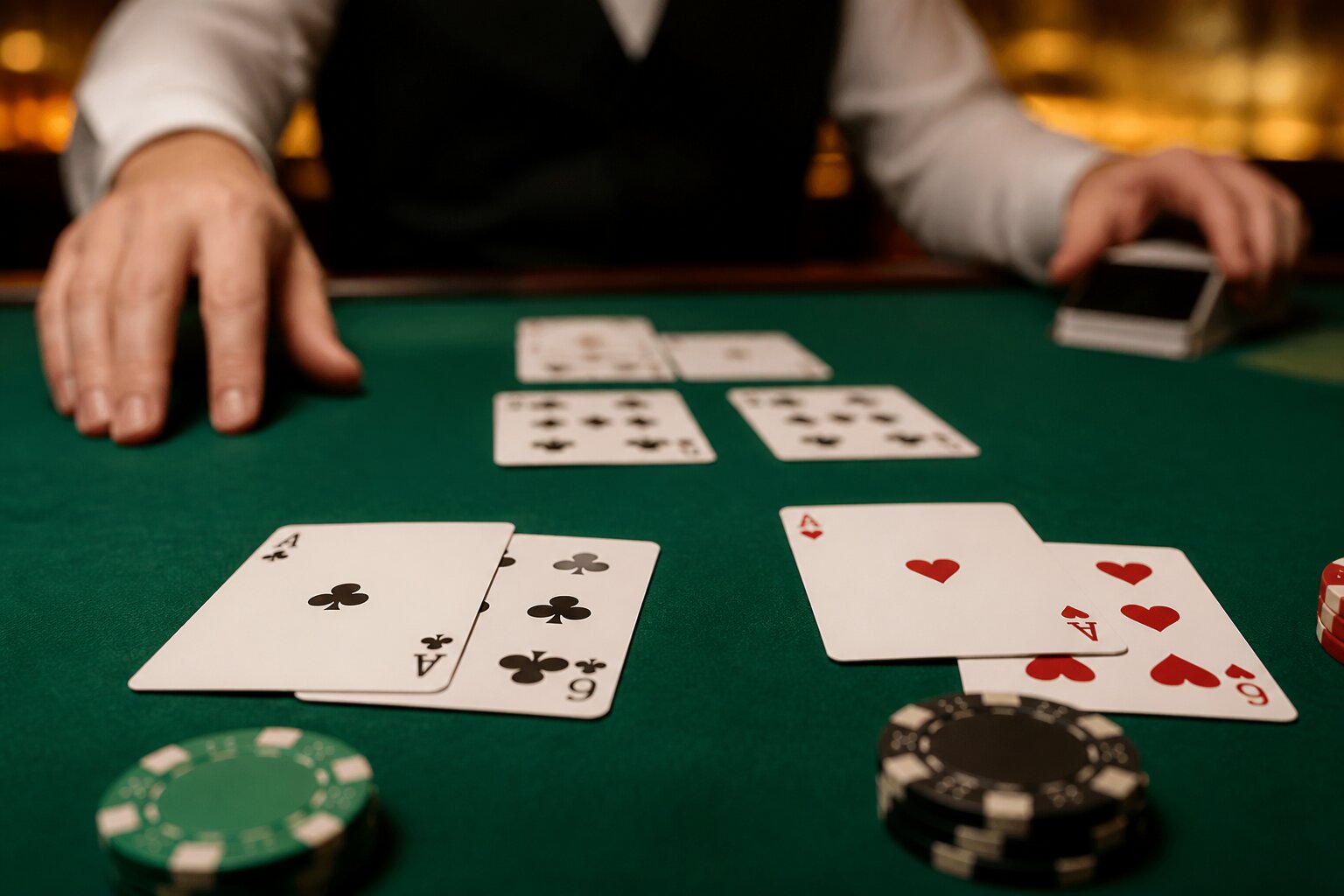
A push in blackjack occurs when the player and the dealer finish a round with the same hand total. Common tied totals are 18, 19, 20 or 21, but any equal final value results in a push.
When a push happens the hand is treated as a draw and the player’s original stake is returned. There is no payout and no collection of the bet by the house. The round ends and play moves on to the next hand. This clear outcome keeps the game straightforward when neither side has the superior hand.
A natural blackjack (an ace plus a ten-value card in the first two cards) can also produce a push if both player and dealer have it. That specific example is useful to remember because a natural is otherwise the strongest two-card hand. The next section explores how that returned stake affects your balance and subsequent play.
How Does a Push Affect Player Outcomes?
When a push occurs your original stake is returned to your balance in full. There is no win added to your funds and nothing removed as a loss. For record-keeping purposes the round is simply marked as a draw.
Because the stake is restored immediately, you can use those funds in the following hand or withdraw them if you prefer. Over a session pushes neither help nor harm your bankroll directly; they simply pause the flow of wins and losses for that particular deal. Understanding that neutral effect can make it easier to assess outcomes over several hands and keep decisions clear as play continues.
Next, we look at the situations that commonly produce pushes so you can spot them as they occur.
When Do Pushes Commonly Occur in Blackjack?
Pushes happen whenever final hand totals match and neither side has busted. Typical situations include both player and dealer standing on the same total, or both being dealt a natural blackjack at the start.
It can also occur after the player stands on a total like 18 or 19 and the dealer draws to the same number. Variants of blackjack may change how many cards the dealer draws, which can influence how often ties occur, so it is worth noting dealer draw rules for the version you are playing. The following section describes exactly what happens to your bet when this tie is declared.
What Happens to Your Bet on a Push?
After a push the bettor’s original stake is given back in full. No winnings are paid and no part of the stake is retained by the house for that hand. The result is straightforward and immediate: your balance returns to what it was before placing the bet.
This handling applies across standard blackjack games. If you are playing a variant that includes side bets or special payouts, read the specific game rules to confirm whether those elements are treated differently when a push occurs. With the basic stake returned, the next section sets out how a push compares with the other possible outcomes in a hand.
Push vs Win vs Loss: Key Differences
A push, a win and a loss are the three basic outcomes of a blackjack hand, each with a clear effect on your stake.
- A push is a tie. The stake is returned and there is no change to your balance.
- A win occurs when the player’s final hand beats the dealer’s without exceeding 21. A standard win pays even money, so the stake is returned plus the winning amount.
- A loss happens when the dealer’s hand is better or the player busts by going over 21. In that case the stake is collected by the house and removed from the player’s balance.
Knowing these distinctions helps you interpret the table quickly and keeps expectations accurate as play continues. With that framework in mind, the next section considers whether pushes are handled differently across venues and game types.
Are Pushes Treated the Same at All Casinos?
The basic treatment of a push—returning the original stake—appears consistently across most casinos and game formats. Where differences arise is in specific variants or additional side bets that may have their own rules.
Land-based and online versions of standard blackjack both commonly return the stake on a push. If a game offers unusual features such as different dealer drawing rules, altered payout structures or special side bets, those features might include exceptions. It is therefore sensible to check the rules shown with the game when you begin playing a new variant.
If you are ready to see how these rules play out in practice, the next section walks through a few realistic examples.
Land-Based vs Online Casino Rules
Whether playing at a table in person or at a digital game, a push normally resolves the same way: the stake is returned. Online games will display the rule text for clarity, and physical tables typically have house rules posted or the dealer can explain them. Both formats aim to make the outcome obvious so play can proceed without delay.
The following examples show common scenarios you are likely to encounter at either type of table.
Examples of Push Scenarios in Real Games
A typical push might occur when both you and the dealer stand on a total of 19. After play ends the dealer compares hands and, finding the equal totals, returns your stake.
If both player and dealer are dealt a natural blackjack from the first two cards, that is another straightforward push. Despite being the strongest two-card hand, a matching natural results in a draw rather than a win for either side.
Another example is when you stand on 18 and the dealer draws cards until they reach 18 as well. Because neither side has a higher hand and neither has busted, the dealer returns the bet and the hand is over.
These scenarios are routine and handled the same way in standard games, so recognising them helps you keep track of outcomes and continue playing without confusion. With the examples in mind, it is useful to clear up common misunderstandings about pushes.
A Push Is Not a Win or Loss
A push is a neutral outcome. It is not counted as a win or a loss and it does not alter the stake beyond returning it to the player.
Some players imagine that pushes might be treated inconsistently by operators, but standard practice is clear and the stake is returned. Pushes also do not change the underlying probabilities of winning or losing across multiple hands; they simply register as ties in the session record.
Clear knowledge of how pushes work removes ambiguity and helps keep decisions consistent as you play, closing with a final note on sensible play and the role of rules in ensuring fair outcomes.
By recognising pushes, understanding their effect on your stake and spotting the situations that create them, you’ll be better placed to follow each hand and make informed choices as play continues.
**The information provided in this blog is intended for educational purposes and should not be construed as betting advice or a guarantee of success. Always gamble responsibly.