
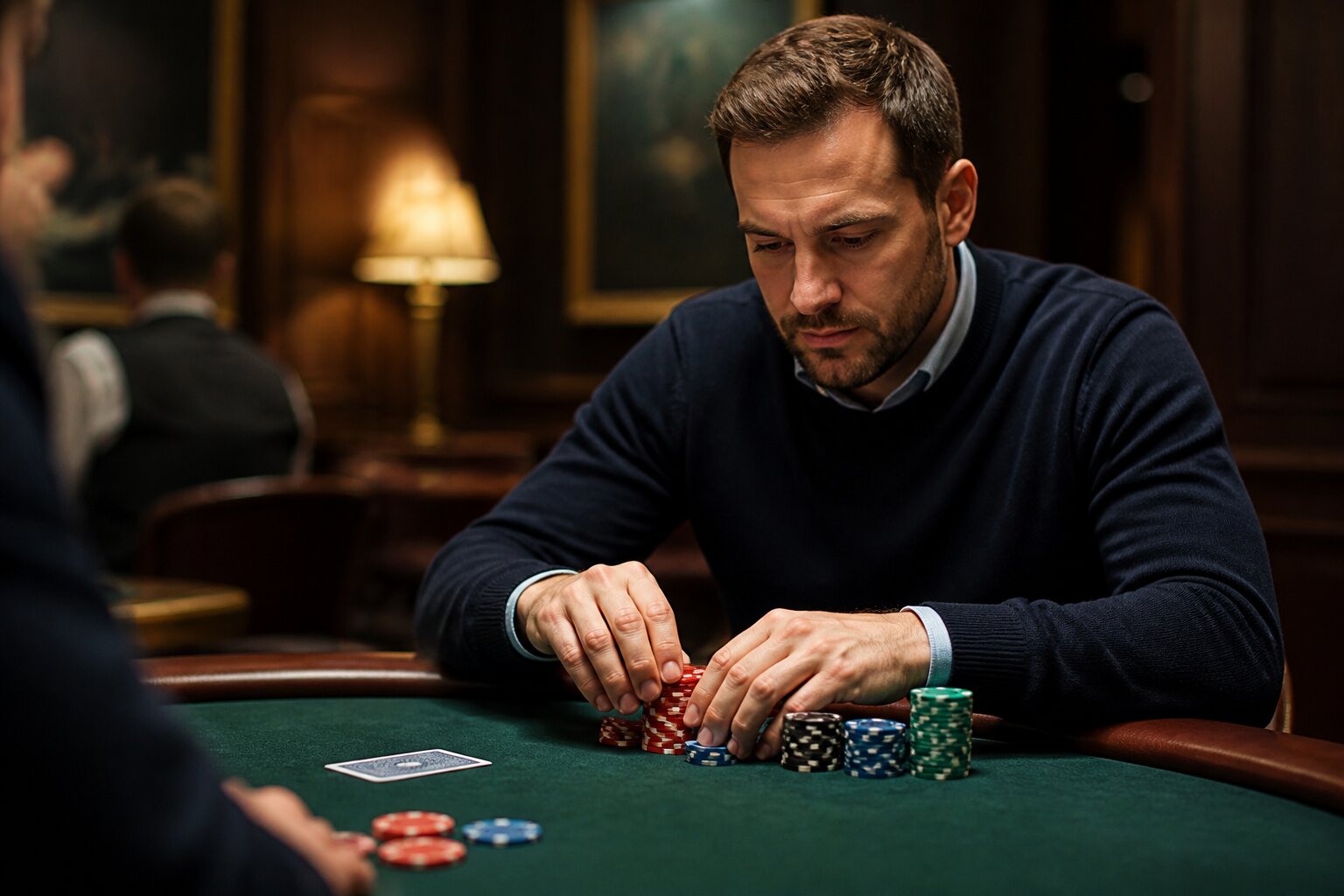
Ever wondered why so many poker players can’t stop fiddling with their chips at the table? Whether it’s stacking, shuffling, or twirling them between their fingers, these habits are everywhere you look—especially in big televised tournaments.
It’s easy to assume it’s just nerves or a way to show off, but there’s more to it. These small actions can reveal clues, mask intentions, or become a ritual that helps players focus while the cards are dealt.
Curious what these chip tricks really mean or if there’s any strategy behind them? Read on as we uncover the reasons behind these table habits and what they might be saying about the players themselves.
What Does Chip Handling Mean in Poker?
Chip handling refers to the various ways players interact with their chips during a game: stacking, sorting, sliding, shuffling or simply fidgeting with them while waiting for action. These motions become part of a player’s style at the table, no different from the way someone folds or places a bet.
For many, these habits are practical: organising chips by value makes bets faster and reduces mistakes. For others, chip play becomes a private routine that helps maintain concentration during long sessions. Whatever the cause, chip handling is part of poker’s etiquette and rhythm.
Understanding these behaviours gives you a clearer picture of table culture and why players behave the way they do, whether you’re learning to play or just enjoy watching live games.
Common Ways Players Fiddle With Chips at the Table
Players use chips in a variety of small, familiar ways around the table. Below are some of the most common actions and what they typically look like.
- Chip stacking: arranging chips into neat piles by denomination so bets are easy to calculate and place.
- Chip shuffling: splitting a stack and quickly moving chips between the fingers to produce a smooth, controlled motion.
- Riffle and clack: a controlled mixing of two halves of a stack that produces a soft clicking sound.
- Spinning and flipping: manoeuvring a single chip between fingers, often a personal flourish or a method to burn off nervous energy.
These actions appear in both casual and professional settings. Some are practical; others are purely personal expression.
Is Chip Shuffling Just a Habit or a Strategy?
Most of the time, chip shuffling is a habit rather than a deliberate tactic. It keeps hands busy and can help some players concentrate during slow stretches. Occasionally, a player might use a confident display of chip handling to project calm or experience, but that projection doesn’t alter the play itself.
Superstitious beliefs about chip rituals don’t change decisions at the table; poker outcomes depend on skill, observation and decision-making. Mentioning self-control and mindful play here is useful—sticking to sensible limits and keeping focus on strategy and rules matters more than any routine.
If you notice someone using chip movements as part of their persona, take it as one small data point among many rather than a reading to rely on.
Psychological Reasons Behind Chip Handling
At its core, chip handling is often psychological. The table can be tense and repetitive; small, familiar actions provide a sense of continuity. For some players, repetitive motion reduces stress and keeps attention anchored to the present moment.
Routine also helps with focus. When players develop a comfortable set of motions, those movements can act as a cue to enter a competitive mindset. For others, fidgeting is simply a physical way to stay alert during long or boring hands.
These behaviours vary widely between people. What calms one player may distract another, so chip handling is best understood as a personal coping or concentration tool rather than a universal technique.
You’ll notice how this ties back to the idea of table image in the next section—those small habits help form the impression others take away.
How Do Chip Tricks Affect Table Image?
Chip handling contributes to a player’s table image—the impression they give opponents about experience, temperament and style. Tidy stacks and deliberate motions can signal control, while messy chips or flustered handling may suggest inexperience.
That said, appearances can mislead. A calm chip routine doesn’t guarantee skill, nor does nervous fiddling mean a weak player. Experienced players know image is one piece of a larger puzzle; they combine it with betting patterns, timing and play history when making judgements.
Reading image is valuable, but it’s most effective when used alongside other observations rather than on its own.
Table Etiquette: What’s Acceptable Chip Play?
Chip handling should never disrupt the game. Subtle fidgeting or quiet, neat stacking is usually fine, but actions that make loud noises or draw attention can be frowned upon. The priority at any table is keeping play fair and unobstructed for everyone.
If chip handling slows the game or distracts others, a dealer or floor staff might ask a player to stop. Players who wish to practice tricks should do so away from active tables or in casual settings where it won’t interfere with play.
Polite awareness of those around you keeps the atmosphere comfortable and prevents minor quirks from becoming a nuisance.
Myths About Chip Tricks and Superstitions
People often ascribe meaning to chip habits—thinking a particular trick signals strength or that a routine can influence outcomes. These are myths. Chip habits are personal tics or styles, not a code.
Avoid giving these behaviours undue weight. Focus on observable patterns that have a clear link to play—such as bet sizes, timing and position—rather than on ritualised movements.
One brief note on healthy play: keeping perspective and limits is part of a responsible approach to gambling, so prioritise clear thinking and sound decision-making at the table.
How Can You Read Opponents Through Their Chip Habits?
Some players try to interpret opponents’ chip movements, but reliable reads come from consistent, corroborated signals. A single nervous gesture might mean nothing; repeated, consistent behaviour paired with betting patterns can be informative.
Use chip habits as a small piece of evidence rather than a definitive clue. Combine what you see with how an opponent bets, how long they take to decide, and how they’ve played previous hands. Putting these elements together gives a fuller and more dependable picture.
Overreliance on any single cue—chip handling included—can lead to mistakes. Treat it as part of the broader context of the table.
Does Chip Handling Distract or Improve Focus?
For many players, tactile activity improves focus by providing a simple outlet for nervous energy or idle hands. It can help players stay present between hands and make clearer decisions when action resumes. Players often report that gentle chip handling reduces stress and keeps their mind occupied without interfering with thought processes.
Conversely, excessive fiddling may pull attention away from the game or annoy nearby players. It can lead to missed information, slower reactions, or create a distracting table atmosphere for others. The negative effects typically depend on:
- how much the player fidgets,
- how sensitive other players are to distraction,
- the overall noise and pace of the table.
The effect depends on the individual and the table environment. Experienced players learn to tune out distractions, including others’ habits, to stay sharp. They also develop self-awareness about when their own handling becomes disruptive to their concentration or to the game flow.
Overall, chip handling’s impact on concentration is personal: some benefit, some are hindered, and most fall somewhere in between. Being mindful of personal tendencies and considerate of the table usually helps strike a balanced approach.
Should Beginners Copy Experienced Players’ Chip Habits?
Beginners often imitate visible behaviours they think are signs of expertise. That impulse is natural, but chip habits are not a reliable shortcut to better play. They are personal tools, not performance enhancers. What helps one player focus may distract another.
If you are starting out, concentrate on core skills rather than outward mannerisms. Key areas to work on include:
- understanding hand values
- appreciating the importance of position
- learning sound betting logic
- practising sensible bankroll management
Let your own table manner develop naturally. There is no need to adopt someone else’s rituals just because they look professional.
A simpler, calmer approach keeps your decisions clear and helps you build genuine competence over time. Playing with clear intent and focusing on fundamentals reduces mistakes and supports steady improvement without relying on superficial habits.
Summary: What Chip Play Says About Poker Players
Chip play highlights the human side of poker: routines, self-soothing motions and personal expression all appear around the table. These habits can shape impression and mood, but they aren’t signals that determine outcomes.
Pay attention to chip handling as one of many interpersonal cues, use it sparingly in your assessments, and keep your focus on strategy, observation and sensible limits. That balanced view will serve you better than copying tricks or overinterpreting small gestures.
If you enjoy the game, let your own style evolve while keeping the table environment respectful for everyone—good play comes from chance, skill, awareness and clear thinking.
**The information provided in this blog is intended for educational purposes and should not be construed as betting advice or a guarantee of success. Always gamble responsibly.