
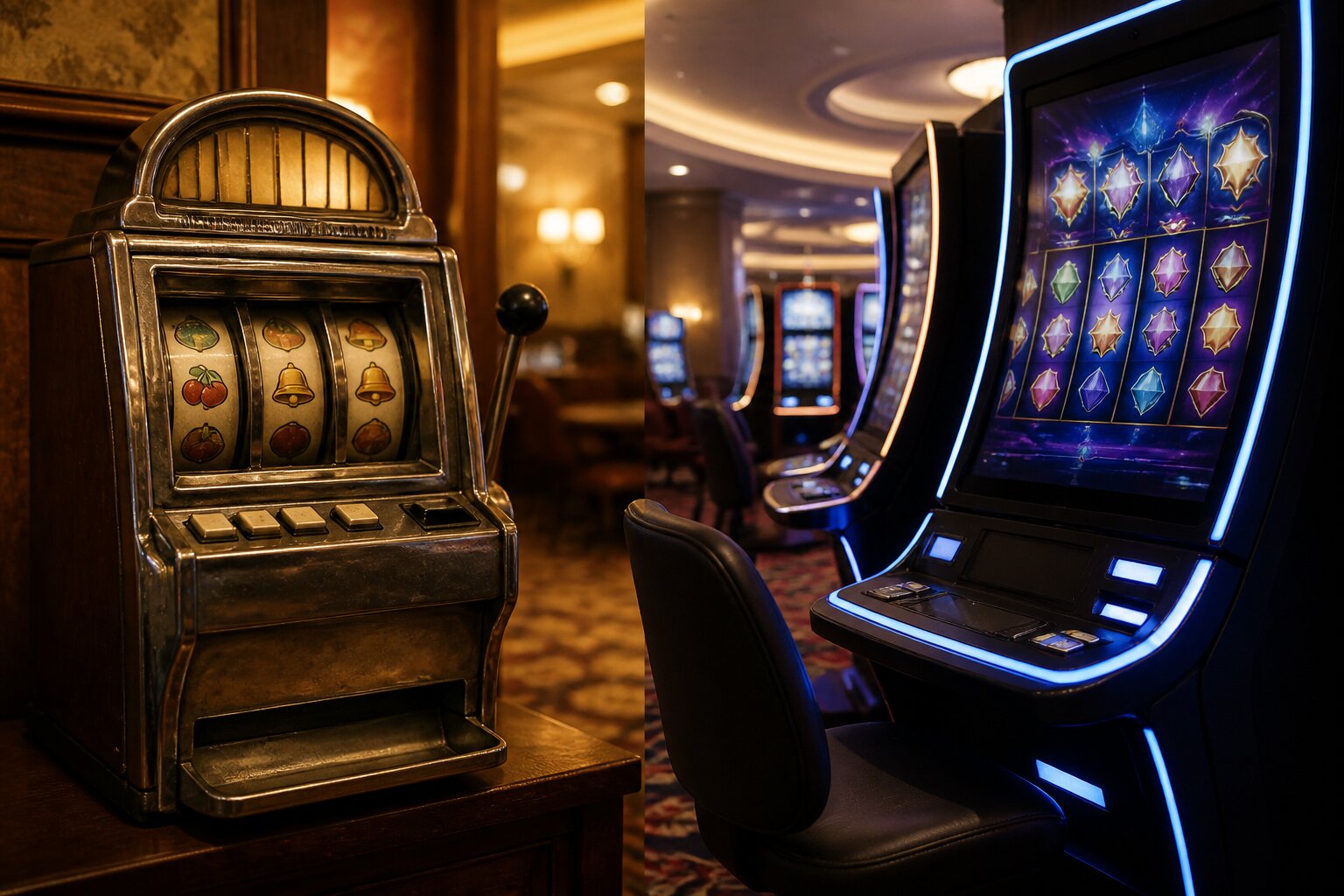
Ever found yourself drawn to the bright lights of a shiny new online slots while feeling nostalgic for those classic machines from years gone by? You’re not alone.
With so many online slots to choose from — from three-reel classics to modern games packed with features — it’s natural to wonder which type offers the best experience.
This article compares the two styles, explains how they differ, and helps you decide which might suit your tastes and playing habits.
What Defines a Classic Slot Machine?
Classic slot machines are built around simplicity. Most have three reels and a single payline, so the aim is clear: line up matching symbols. The artwork and sounds are intentionally minimal, often showing fruit symbols, bars, bells and sevens, with straightforward chimes rather than elaborate audio.
Payouts are determined by fixed paytables that are easy to read, and betting choices are usually limited. Without bonus rounds, free spins or animations, the focus is simply on spinning and matching. That makes classic slots quick to understand and fast to play, which many players find appealing.
These games can be found in both physical casinos and online versions that replicate the traditional feel. If you prefer a low-friction, predictable session where attention stays on the core mechanics, a classic slot delivers that experience. Next, we’ll look at what modern machines bring to the table and why they attract a different audience.
What Makes Modern Slots Stand Out?
Modern slots use contemporary technology to create richer, more varied experiences. They typically feature five reels or more, multiple paylines and a wide range of betting options. Themes are a major draw: developers recreate worlds inspired by films, myths, history and music, complete with matching symbols, soundtracks and backgrounds.
Gameplay features are also expanded. Modern titles commonly include wilds and scatters, free-spin rounds, pick-and-win mini-games, expanding reels and cascading symbols, all designed to add layers of excitement and variety. Visuals and animations are usually high quality, and some games even weave simple narratives into the play, making each session feel more like entertainment than a single mechanical task.
These design choices increase the range of experiences available, from casual, low-stakes spins to deeper sessions where bonus features and mechanics shape the pace. Having seen how modern slots differ, the next section explores how those differences actually affect gameplay.
How Does Gameplay Differ Between Classic and Modern Slots?
The contrast between classic and modern slots is most apparent while you play. Classic slots are about direct interaction with the reels and immediate outcomes. With fewer elements on screen, decisions are limited and sessions tend to feel brisk and uncomplicated.
Modern slots offer a broader rhythm. Multiple paylines and bonus mechanics create more opportunities within a single spin, and interactive features can alter the odds and rewards you face across a session. Where a classic game emphasises steady, recognisable patterns, a modern game can change its structure mid-play through re-triggered features or progressive rounds.
Sound and spectacle also shape the perceived pace. Classic slots rely on simple audio cues; modern titles use layered soundtracks and visual cues that build anticipation during bonus sequences. These differences mean players choose based on whether they prefer direct, uncomplicated play or a more varied, feature-driven experience. With those gameplay patterns in mind, it helps to consider how payouts compare between the two styles.
Simplicity vs Advanced Features
Classic slots’ simplicity makes outcomes easy to track and understand, while modern features introduce conditional elements that influence potential returns and the feel of a session. Both approaches are valid, but they create fundamentally different playing rhythms and expectations — one steady and straightforward, the other varied and feature-led.
Which Offers Better Payouts: Classic or Modern Slots?
Payouts depend less on a game’s vintage and more on its design metrics, the most useful being Return to Player (RTP). RTP is the long-term percentage of stakes a game is expected to return to players. A slot with a 96% RTP, for instance, will return an average of £96 for every £100 staked over a long period.
Classic slots often have higher individual symbol values on a single payline but fewer ways to win. Modern slots offset smaller single-win sizes with many more paylines and bonus mechanics that generate frequent smaller wins or larger bonus payouts when they trigger. RTPs can vary widely in both categories, so checking the listed RTP and game rules is the best way to set expectations.
Whichever format you prefer, remember outcomes are controlled by certified systems designed to be fair and transparent. That reliability is the next subject we’ll examine.
Are Classic Slots More Reliable Than Modern Machines?
Reliability stems from regulatory standards and the underlying random number generation technology, not from whether a game looks old or new. Both classic and modern online slots use RNGs to ensure every spin is independent and outcomes are not predictable.
Regulatory testing and software certification check that games operate as described, and audits confirm that RTPs and randomness meet the required standards. Whether a game is visually simple or feature-rich, the technical safeguards aim to ensure the same level of fairness and consistency.
Understanding this technical parity helps when choosing between styles, and it also influences who prefers which type of game.
Player Appeal: Who Prefers Which Type and Why?
Player preferences split along two main lines. One group values classic slots for their clarity and quick pace; these players like sessions that are easy to follow and don’t require learning multiple features. Another group enjoys modern slots for their variety — themed visuals, bonus rounds and changing mechanics provide a different kind of engagement.
Practical factors also matter. Players on mobile devices sometimes favour modern slots that are optimised for touch play and deliver strong visual feedback, while others prefer classic games when they want a short, uncomplicated session with minimal distraction.
Whatever the reason for choosing one style, it’s sensible to play within personal limits and be aware of the mechanics that shape session length and spend. With common misconceptions cleared up, the next section addresses some of the most persistent misunderstandings about slot machines.
Common Misconceptions About Old and New Slot Machines
Several persistent myths shape how people think about slots. One is the idea that a machine is “due” to pay because it hasn’t produced a big win in a while. In fact, each spin is independent and determined by the RNG, so prior results don’t change future outcomes.
Another misconception is that modern slots are somehow less fair because they include more features or sophisticated graphics. The regulatory and testing frameworks apply equally to all games, so complexity of design doesn’t equate to unfairness. Finally, assumptions that one style pays out more than the other ignore the wide RTP variance across games; payout behaviour is a product of individual game design rather than age or aesthetics.
Clearing up these points can help you choose a game based on how you want to play rather than on myths. Looking ahead, the industry’s next developments will shape how both styles evolve.
The Future of Slot Machines: Trends and Player Expectations
Slot development continues to respond to technology and player demand. Expect more immersive themes, creative mechanics and optimisation for a wide range of devices. Developers are experimenting with multi-level features, richer story elements and improved accessibility, so players can enjoy a greater variety of experiences on phones, tablets and desktops.
Tools to help players manage their activity are becoming more integrated and easier to use, giving clearer options for setting limits or taking a break when needed. As regulations evolve alongside technology, the aim is to keep games transparent and consistent across formats, while offering fresh ways to play.
Whether you favour classic simplicity or modern mechanics, the market is expanding to cater for both tastes. That variety means players can pick the type of session that suits them, and expect continued oversight and technical standards as the industry moves forward.
**The information provided in this blog is intended for educational purposes and should not be construed as betting advice or a guarantee of success. Always gamble responsibly.