Ever heard someone shout "monkey!" at the blackjack table and wondered what on earth they meant? You're not alone. Blackjack has its own language, and "monkey" is one of the most curious pieces of slang.
Whether you’re just starting or you already spend time at the felt, knowing the lingo makes the game more social and helps you feel at ease among other players. In this post we’ll explain exactly what "monkey" means in blackjack, trace its likely origins, show how players use it at the table, and compare it with other common casino terms so you can recognise it wherever you play.
Ready to decode the slang and join the conversation at your next game? Let’s get started.
What Does 'Monkey' Mean in Blackjack?
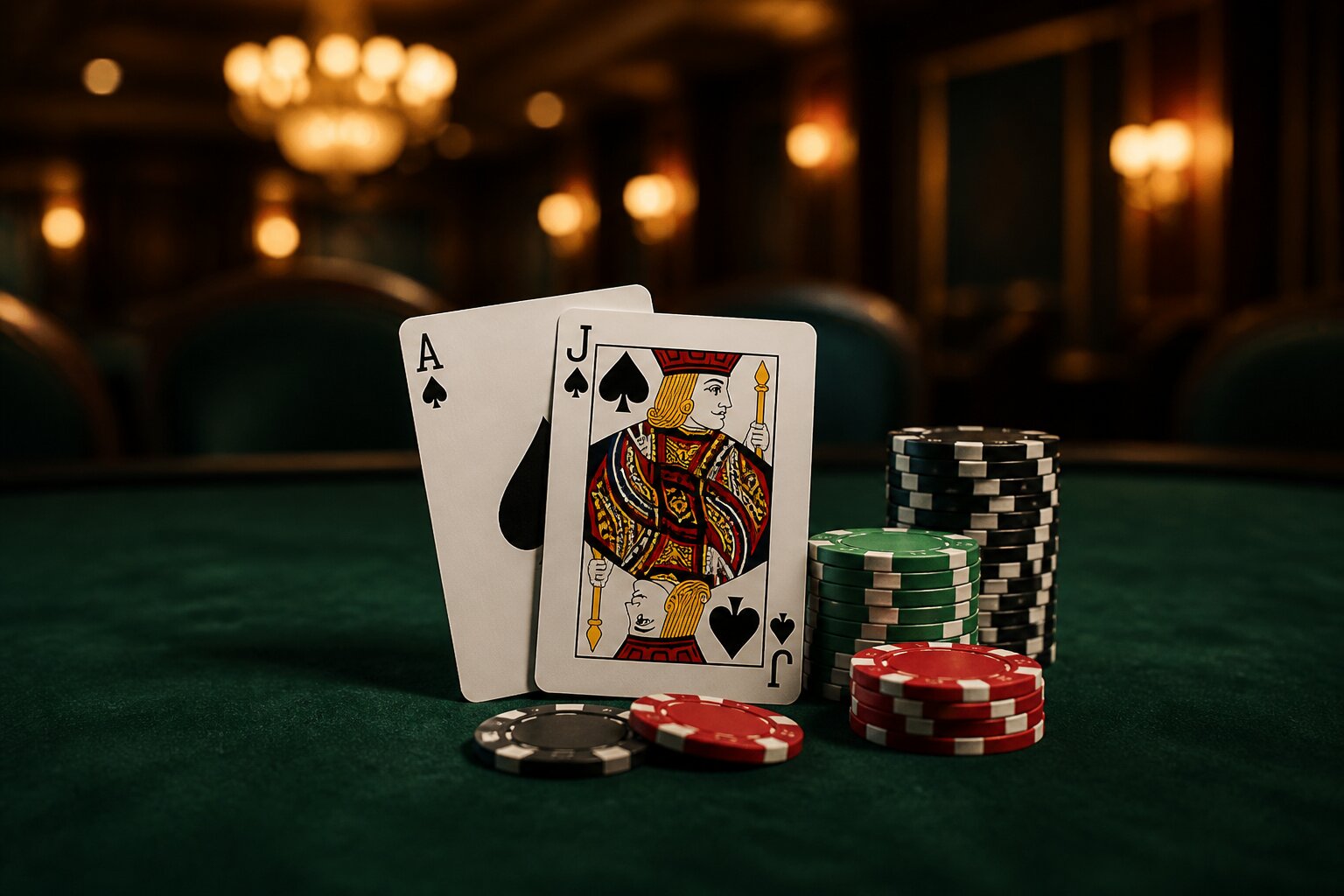
In blackjack, "monkey" is informal betting slang for any card that counts as ten points: the ten, Jack, Queen and King. Players use the word when they want a ten-value card to complete a strong hand—typically when an Ace is already present or when doubling down on eleven.
Saying "monkey" is a playful expression of anticipation rather than a technical term. It has no bearing on the rules, the dealing process, or the odds, but it does add a bit of theatre to the table. A quick example: a player holding Ace and looking for a natural blackjack might call out “monkey!” as the dealer turns the second card.
Next, we’ll look at where this particular piece of slang likely came from and how it found its way into casino talk.
Origins of the Term 'Monkey' in Casino Slang
The exact origin of "monkey" isn’t firmly recorded, but the phrase has roots in wider casino slang and informal speech at gaming tables. Slang often travels through multicultural gambling hubs and adapts as it spreads; some accounts link the term’s popularisation to English-speaking players and dealers in busy Asian gaming centres, where a quick, recognisable word for ten-value cards proved useful.
There’s also a general tendency in gambling culture to use animal and character names for cards and chips, which helps terms stick in memory. "Monkey" likely survived because it’s easy to say and keeps table banter brisk. Understanding that the term grew out of social interaction helps explain why it is used mainly for entertainment rather than as any formal instruction.
Knowing how the phrase entered casino vocabularies makes it easier to spot when dealers and players are simply joking or making light conversation; the next section explains how that plays out at live tables.
How Is 'Monkey' Used at the Blackjack Table?
At a live blackjack table, "monkey" appears most commonly as light-hearted chat among players and occasionally with dealers who join in. It functions as a social cue and a moment of shared expectation rather than any formal element of play. The word signals a desire or hope for a particular outcome, but it has no effect on rules, payouts or the course of the hand.
The term is firmly part of table banter. Players use it when tensions are high or when a decision hinges on one card, and the resulting exchange can help to ease nerves and build camaraderie. Dealers sometimes respond in kind, offering a smile or a quick quip, but any such banter is purely social and separate from the official dealing procedure.
Player Reactions and Dealer Calls
Players tend to utter "monkey" in moments of high anticipation: after doubling down on eleven, when an Ace awaits a second card for a natural blackjack, or whenever a ten-value would produce a markedly stronger total. The tone can be anything from a quiet mutter to a jocular shout, shaped by the table’s atmosphere and the personalities of those involved.
Because it is social in nature, the call of "monkey" varies from table to table. In some games it is whispered between friends; in others it is part of the louder, more competitive chatter. Dealers may acknowledge it with a friendly comment, but they will never let banter influence how cards are dealt or apply any special treatment to players who call it out.
Common Misconceptions
A common misunderstanding is to treat "monkey" as a formal term tied to strategy, special rules, or chip values. It is none of those things. The phrase does not alter probabilities, change how cards are dealt, or introduce new options for play.
Occasionally people assume it is connected to a particular chip denomination or a house rule; in blackjack it does not indicate either. It carries no regulatory or financial meaning and should not be construed as advice or a signal that affects the integrity of the game. With that cleared up, the next section specifies exactly which cards fall under the "monkey" label.
Monkey Cards: Which Cards Are Included?
When players refer to "monkey" cards they mean the four kinds of cards that each count ten points in blackjack. The term groups together all the cards that carry the value of ten, making it quicker to talk about hand totals at the table and among players.
These are:
- 10
- Jack
- Queen
- King
Each of these contributes ten points to a hand, which is why a single word covers them all at the table. Tens and face cards are treated the same for scoring, so whether a ten or a king appears, the effect on the hand total is identical.
Knowing which cards qualify as "monkeys" helps explain why certain hands prompt louder reactions from players, a subject explored in the next section. The shared value of these cards also affects the likelihood of forming strong hands such as blackjack or pairs, which is why their appearance can change the mood around the table.
Why Do Players Hope for a 'Monkey'?
A ten-value card can be decisive in several common blackjack situations, which is why players so often voice a wish for a "monkey." When an Ace is paired with a ten-value card in the first two cards, the result is a natural blackjack—a strong outcome in many games. Similarly, doubling down on eleven makes a ten particularly valuable because it produces a total of 21 on the single additional card allowed in that play.
Players also prize ten-value cards when they hold totals that sit close enough to 21 that ten points will typically improve the hand without busting. In cases where Aces are split, drawing ten-value cards to the resulting hands can create favourable individual totals.
While players may vocalise these hopes at the table, the practical point is that a ten-value card often offers the best immediate improvement for specific hands. Keep in mind the usual advice to manage your spending and set sensible limits while playing; that helps the game stay enjoyable.
With the practical reasons why tens are prized covered, a quick comparison with other slang terms clarifies how "monkey" fits into the wider vocabulary.
Comparing 'Monkey' With Other Casino Slang
Casino slang gives shorthand names to common situations and cards, and "monkey" sits alongside several other familiar terms. Below is a concise comparison to make the distinctions clear.
Monkey
Meaning: Any card valued at ten (10, Jack, Queen, King).
Example: Used when hoping to draw a ten-value card.
Paint
Meaning: Any face card (Jack, Queen, King).
Example: Asked for when a picture card is desired, not necessarily for its ten-point value.
Ace
Meaning: The card that can count as either one or eleven in blackjack.
Example: Sought after for potential high-value hands or naturals.
Brick
Meaning: A card that doesn’t improve a hand appreciably, typically a low card.
Example: Used when a drawn card leaves the player worse off tactically.
Blackjack (Natural)
Meaning: An Ace together with any ten-value card as the first two cards dealt.
Example: Referred to as a "natural" when it appears.
These terms are part of table chatter and help players communicate wishes and frustrations quickly; the next section looks at whether "monkey" carries the same meaning in other games.
Does 'Monkey' Have the Same Meaning in Other Card Games?
The meaning of "monkey" is not universal across all card games. In blackjack it specifically denotes ten-value cards, but in other contexts the word may shift.
For instance, in some poker circles the term can be used loosely to mean a face card, though that usage varies by region and group. In baccarat, tens and face cards all count as zero, so players might refer to those cards collectively in a way that resembles blackjack slang but with a very different scoring implication.
The key takeaway is that slang travels and adapts: words familiar at a blackjack table might mean something slightly different in a different game or casino. When joining a new table, a quick listen to how terms are being used is often enough to avoid confusion.
Understanding the precise meaning in each game helps you read situations correctly and join the table’s conversation with confidence.
Play Casino Games at Barbados Bingo
Discover the laid-back enjoyment of playing casino games on our site, where you can unwind and have a pleasant time at your own pace. We welcome everyone to explore our friendly community and take in the excitement of our games whenever it suits you.
Joining us is straightforward – simply create an account, make a deposit and you’re ready to get involved. We look forward to seeing you on Barbados Bingo for a rewarding experience.
**The information provided in this blog is intended for educational purposes and should not be construed as betting advice or a guarantee of success. Always gamble responsibly.