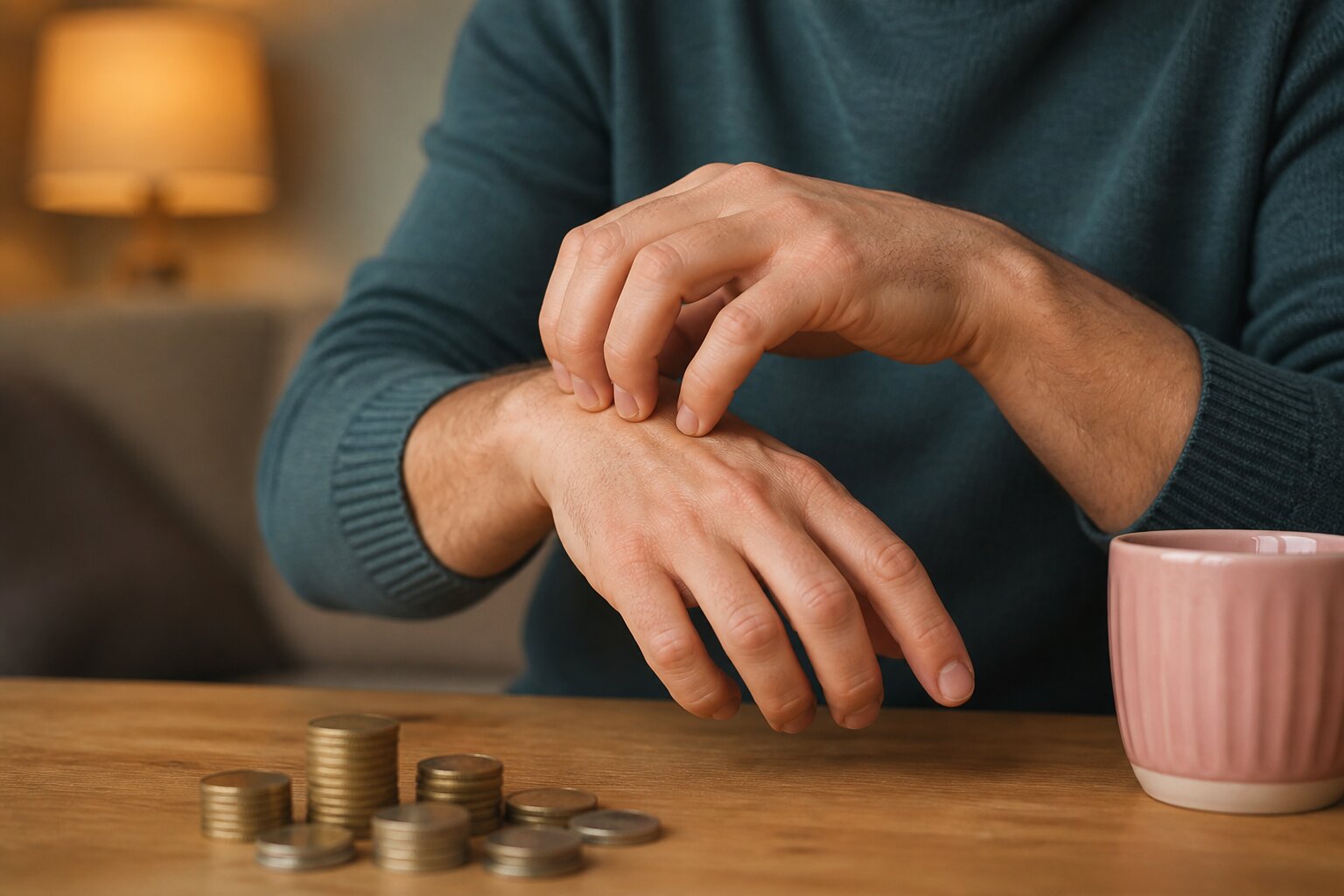
Have you ever felt your right hand itching and wondered if it means money is coming your way—or that a lottery win is imminent? That little tingle has sparked conversations and superstitions for generations, turning an ordinary sensation into something that feels meaningful.
This article traces where the belief came from, looks at what science says, and explains why sensations in the body don’t affect the outcome of games that use random draws. Read on to separate the folklore from the facts and to understand what really matters when you choose to play.
Is There a Link Between Right Hand Itching and Winning the Lottery?
There is no reliable link between an itchy right hand and a lottery win. Superstitions may be entertaining, but there is no evidence that sensations in the body change the probability of a successful ticket.
Lottery draws are carried out using regulated procedures and impartial mechanisms designed to ensure each ticket has the same statistical chance. Numbers are selected through mechanical or certified electronic systems, and the result is governed by probability rather than personal signs or rituals. If you’re curious about the mechanics behind draws and odds, the next section looks at how these beliefs first took hold and why they persist.
The Origins of the Right Hand Itching Belief
The idea that an itchy right hand signals incoming money appears in many cultures and has been passed down through oral traditions and sayings. In some older societies, the right hand was associated with honour or good outcomes, while the left was linked to losses; an itch became shorthand for impending change in fortune.
These phrases often began as colourful ways to explain the unpredictable elements of life and were reinforced by storytelling. Over time, they hardened into commonly repeated phrases, even though they never rested on empirical observation. Understanding these cultural roots helps explain why the superstition still feels convincing to some people, which leads naturally into why scientific investigation finds no basis for it.
Does Science Support the Myth?
Scientific and medical perspectives do not support the idea that an itchy palm predicts financial gain. Dermatological causes such as dry skin, eczema, contact irritation or an allergic reaction are far more likely explanations for an itchy hand. Neurological conditions and temporary nerve irritation can also cause tingling sensations.
Psychology explains why people link unrelated events: the brain seeks patterns and remembers hits more readily than misses. That selective memory—confirmation bias—creates the impression that the itch predicted an outcome when in reality it was coincidence. There is no experimental evidence or biological mechanism that would allow a bodily sensation to influence a random draw, so the claim does not stand up to scientific scrutiny.
Common Misconceptions About Lottery Wins and Hand Itching
Many misconceptions about itching and lottery wins stem from the idea that personal signs can alter outcomes. In practice, no sensation or ritual affects the mechanics of a draw or the mathematics that determine odds. Misunderstandings often arise when people conflate coincidence with causation, or when cultural phrases are taken literally.
Psychological comfort and a desire for control explain why such myths endure. People prefer explanations that make uncertain events feel less arbitrary, and superstition fulfils that need. Next, we’ll look at how similar ideas differ across cultures and why those differences don’t change the underlying facts of how lotteries operate.
Psychological Explanations for Perceived Links
The tendency to connect an itch with a subsequent event is accounted for by well-documented cognitive habits. Confirmation bias leads people to notice and recall the times a symptom and an outcome coincide, while forgetting the many times they do not. Pattern-seeking is another factor: humans are wired to detect associations, even where none exist.
These behaviours make superstitions feel plausible without providing any actual predictive power. Such psychological explanations demonstrate why the belief persists even when confronted with statistical improbability.
Cultural Variations in the Meaning of Itchy Palms
Different cultures assign different meanings to which hand itches. In some places the left hand is linked to receiving money, elsewhere the right; in other traditions an itch might mean news is coming or a social visit. These meanings are shaped by language, custom and local folklore rather than by any universal principle.
Cultural variety illustrates how the same sensation can be woven into very different narratives, but it does not change the objective way games of chance work—numbers are drawn independently of human interpretation.
What Really Influences Lottery Outcomes?
Lottery outcomes are determined by strict procedures and the mathematics of probability. Draws use certified machines or audited electronic systems, and regulatory frameworks ensure transparency and fairness. Every ticket bought for a particular draw participates under the same rules, which means no external signal or personal feeling can alter the statistical likelihood of a win.
Operators and regulators document procedures, publish odds, and maintain audit trails precisely to prevent manipulation and to make the process verifiable. For anyone interested in the specifics, official publications and independent testing describe the safeguards that preserve the integrity of draws. With that technical background in mind, the sensible approach to participation becomes clearer.
Should You Take Right Hand Itching Seriously?
An itchy right hand makes for an intriguing story, but it should not guide decisions about spending on gambling activities. Treating superstitions as predictors can lead to unrealistic expectations and poor choices. A more productive response is to acknowledge the sensation, consider medical causes if it’s persistent, and keep financial decisions grounded in information about odds and personal limits.
If gambling ever starts to feel difficult to control, support is available from confidential advice services. Organisations provide guidance on setting limits and finding help, and they can assist anyone who needs to reassess their habits to keep play safe and manageable.
Conclusion: Separating Fact from Fiction
The belief that a tingling right hand forecasts a financial gain is a longstanding bit of folklore rather than an evidence-based signal. Sensations in the body almost always have physical or psychological explanations, and they do not affect the random processes that determine lottery outcomes.
Lotteries operate under clear rules and verified procedures so every participant faces the same statistical chances. Treating games as entertainment, making informed choices about spending, and seeking help if play becomes problematic are the practical steps that matter. With those points in mind, the itch can remain an interesting anecdote rather than a decision-making guide.
**The information provided in this blog is intended for educational purposes and should not be construed as betting advice or a guarantee of success. Always gamble responsibly.