
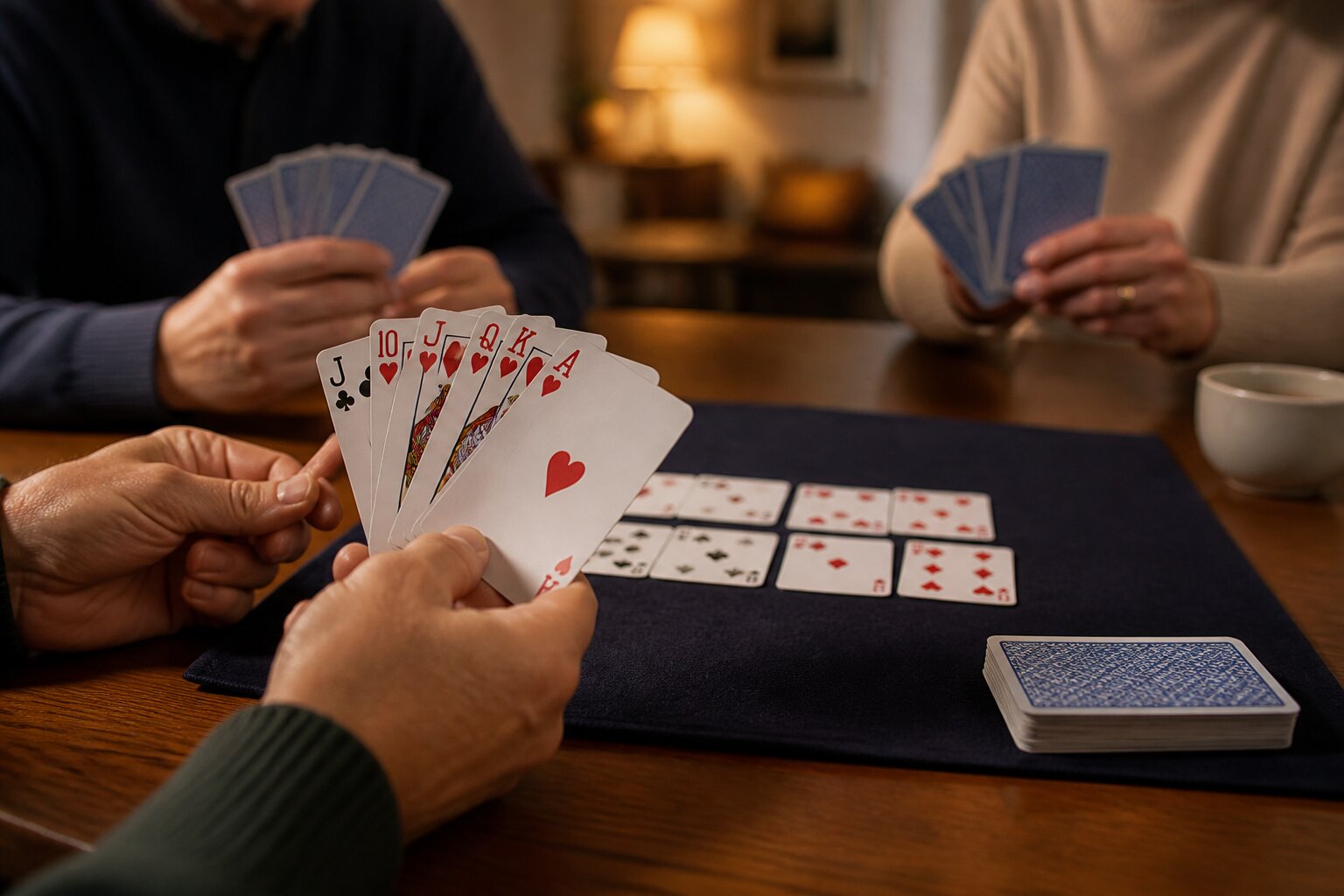
Fancy trying a classic card game that’s easy to pick up but still offers plenty to think about? Rummy has been a favourite at family tables and social gatherings for decades.
This guide explains the rules clearly, shows how many cards you need, and walks you through the flow of a typical round. Whether you’re brand new or want to freshen up your knowledge, you’ll find everything here to play with confidence.
Keep reading to learn how the game unfolds and what to watch for as you plan your hand.
What Is the Rummy Card Game?
Rummy is a card game built around arranging the cards in your hand into valid groups called melds. These melds take the form of sets—cards of the same rank but different suits—or runs, which are sequences of consecutive cards in the same suit. Players take turns drawing and discarding, adjusting their hands as they aim to complete the required combinations.
There are many regional and rule variations, from Indian Rummy to Gin Rummy and Kalooki. Each variation tweaks the number of cards dealt, the use of jokers, or scoring methods, but the central idea remains organising your hand into melds. The game rewards careful observation and planning rather than impulsive play.
If you want to know how many cards you’ll need and what to do with them, the next section explains typical hand sizes and how decks are used.
How Many Cards Are Used in Rummy?
A common format for classic rummy deals 13 cards to each player from a standard 52-card deck. This setup gives players enough cards to form multiple melds while keeping the round reasonably paced.
Some variations change the deal: Gin Rummy usually gives 10 cards per player, while certain two-player or quick-play versions use just 7. For larger groups, two decks shuffled together supply a bigger pool and often include jokers that act as wild cards, though whether jokers are used depends on the chosen variant.
Deciding on the number of cards and whether to include jokers is part of agreeing the rules before play starts, which helps avoid confusion once the game begins. Next, we’ll look at arranging the table and dealing so you can get a round underway smoothly.
How to Set Up a Game of Rummy?
Setting up is straightforward. Use a well-shuffled 52-card deck, or combine two decks if you’re playing with a larger group or a variant that requires extra cards. Designate a dealer and sit so everyone can see the central piles easily.
The dealer deals the agreed number of cards face-down to each player, commonly 13 in the classic version. Place the remaining cards face-down in the centre as the draw pile and turn the top card face-up beside it to start the discard pile. That face-up card gives players an immediate idea of what’s available, which can affect early choices.
Before play begins, agree on scoring rules, whether jokers or wild cards are in use, and any house variations. Confirming these points keeps the round fair and reduces disputes, then you’ll be ready to begin taking turns and building melds.
What Are Melds, Sets, and Runs in Rummy?
Melds are the building blocks of rummy: organised groups of cards that meet the game’s combination rules. A set typically contains three or four cards of the same rank in different suits, such as three 7s. A run is a sequence of three or more cards in the same suit, for example 4–5–6 of hearts.
Jokers or designated wild cards may substitute for missing cards in a meld when the rules permit, which changes how flexible a hand can be. When forming melds, players weigh whether to lay combinations down immediately or hold cards to form larger or more valuable melds later in the round.
Understanding melds is crucial because play revolves around drawing cards to improve your hand and discarding those that don’t fit your plan. With that in mind, the next section explains what a typical turn looks like.
How Do You Play a Turn in Rummy?
A turn follows a clear rhythm that keeps play moving. At the beginning of a turn, a player draws one card either from the face-down draw pile or the face-up top card of the discard pile. This decision can change the direction of a hand, since the discard pile may offer a card someone needs for a set or run.
After drawing, a player examines their hand to see if any new melds can be formed. If the rules allow, they may lay down complete melds face-up on the table. Players sometimes hold back, keeping melds concealed to avoid giving opponents helpful information. The turn ends when the player discards one unwanted card to the discard pile, leaving the next player to make their choice.
This cycle of draw, optional meld, and discard repeats until a player goes out or the draw pile is exhausted, and it sets up the moment when a round finishes.
What Signals the End of a Rummy Game?
A round ends when a player has managed to arrange all their cards into valid melds and then discards their final card—that player is said to have “gone out.” Play stops immediately at that point and scoring begins.
If the draw pile runs out first, the round may end without anyone going out; depending on house rules, players might then tally points or reshuffle to continue. After a round finishes, calculate the value of unmatched cards in each player’s hand to determine penalty points. The specific scoring method varies by variant, so having agreed the system beforehand keeps results transparent and consistent.
With the end of a round determined, the next question is how those remaining cards translate into points.
Scoring in Rummy: How Are Points Calculated?
When a round ends, each player counts the cards that are not part of valid melds. Numbered cards score their face value, while face cards—Jack, Queen and King—are usually worth 10 points each. Ace values differ across variations; commonly an Ace scores 1 point, though this should be settled before play.
The player who went out typically records zero for the round, while everyone else adds the values of their unmatched cards to their cumulative score. Games often continue over several rounds until a target score or a set number of rounds decides the overall winner. Keeping score low is the usual objective, so players aim to reduce leftover cards through careful melding and selective discarding.
With scoring explained, it helps to see how different versions of rummy adjust these rules to create varied play styles.
Common Rummy Variations
Different rummy variants change the number of cards dealt, the role of jokers and wild cards, and the scoring approach. Indian Rummy frequently uses two decks and 13 cards per player, with jokers commonly acting as wild cards. Gin Rummy is typically a two-player game with 10 cards per hand and faster rounds. Kalooki often features multiple decks and encourages quick meld formation. Rummy 500 awards points during play for melds made, rather than counting only at round end.
Choosing a variant shapes the pace and strategy of the game, so players should agree on which version to use before dealing. Once everyone is set, the round proceeds under those rules, and the strategies you use will follow naturally from that framework.
Playing rummy well is about reading your hand, anticipating what others might need, and making choices that reduce your score over time. Enjoy the game, respect agreed rules, and play within any personal limits you set.
**The information provided in this blog is intended for educational purposes and should not be construed as betting advice or a guarantee of success. Always gamble responsibly.